


Enquire Form
Are Digital Workflow Errors Affecting Your Clear Aligner Treatment Outcomes?
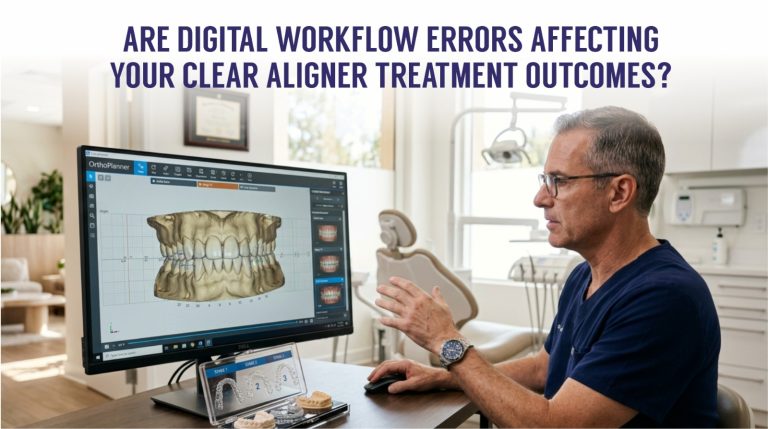
When aligner cases do not go as planned, the first thing most clinicians tend to look at is patient compliance. Did they wear the aligners for the recommended 20 to 22 hours? Did they switch trays on time? These are fair questions, no doubt. But here is the thing; not every treatment setback comes down to the patient. Many times, the problem starts much earlier, somewhere in the digital workflow itself. This is something that does not always get the attention it deserves. So, if you have been seeing unpredictable results despite good compliance, it might be worth looking a little closer at your process. Let us walk through how digital workflow errors can affect clear aligner treatment outcomes, and more importantly, what you can do about it.
How Are Digital Workflow Errors Affecting Clear Aligner Treatment Outcomes:
The digital workflow for clear aligners involves several steps, and each one of them carries its own set of risks. A small error at any point can quietly cascade into a result that looks like nothing like what you planned.
Intraoral Scanning:
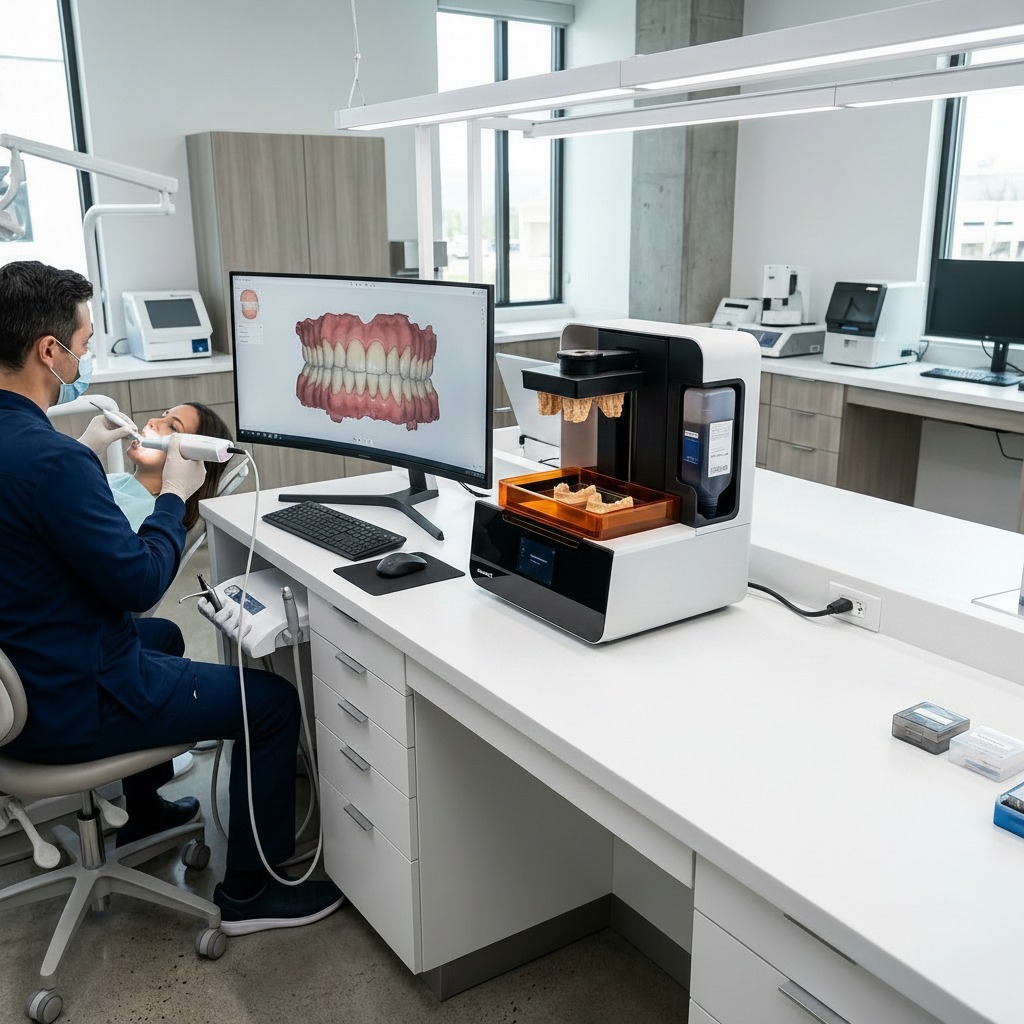
This is where everything begins. The intraoral scan should be performed carefully. It needs to be accurate, detailed, and complete. It is important to record all the teeth, the gingival margins, and the bite accurately. When scans have gaps, stitching errors, or distorted anatomy, the software ends up using the same inaccurate data from the start.
It may not be immediately obvious when you look at the scan on screen, but you will likely feel it the moment the aligner sits in the patient’s mouth. Something just feels slightly off; the fit is not quite right, and teeth that were supposed to be tracking well simply are not moving the way the plan said they would.
Treatment Planning and Software Simulation:
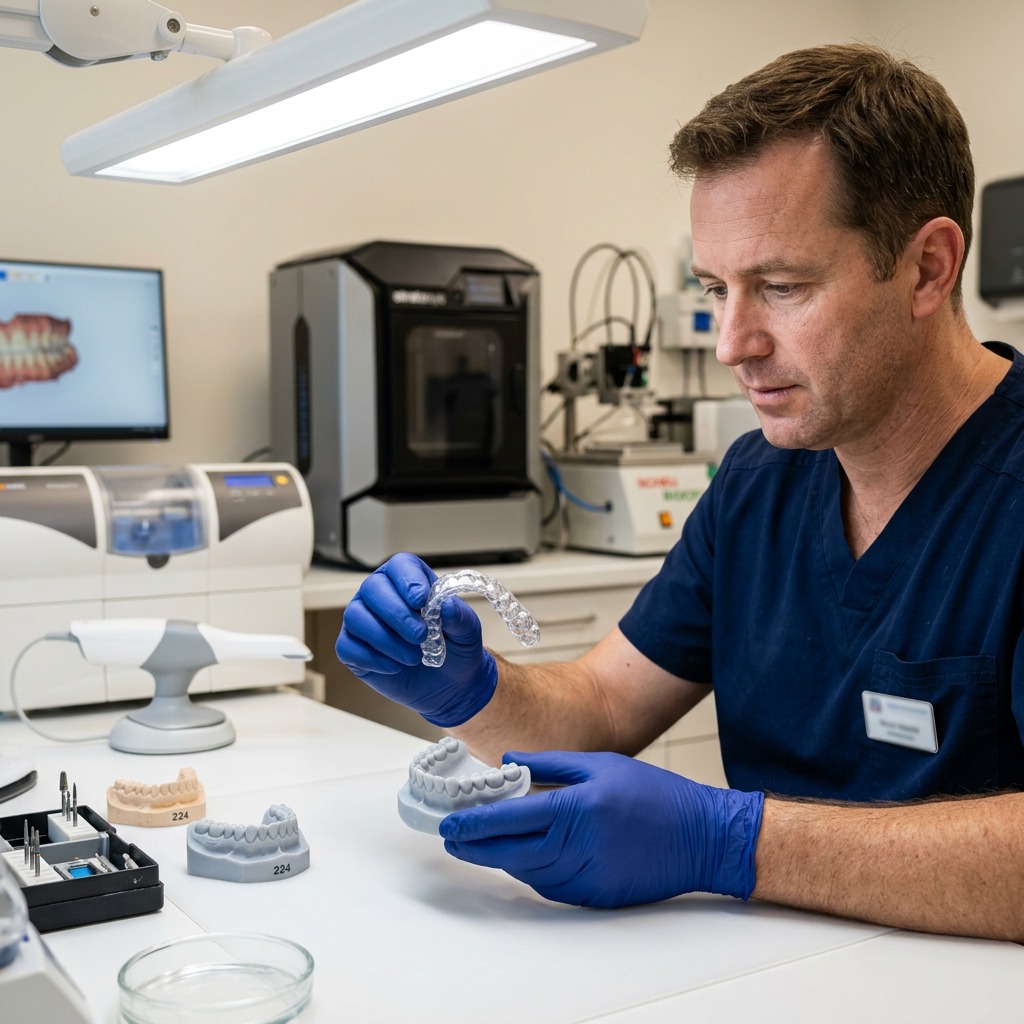
Once the scan is imported into the planning software, the actual planning begins, and this is where a lot of decisions get made, sometimes quite quickly. Clinicians or technicians map out the tooth movements, decide where attachments go, how many stages to use, and in what sequence the teeth should move. It sounds straightforward enough on paper, but there is quite a bit of judgement involved at every step.
The software gives you a visual simulation, which can look quite convincing, but it does not always reflect what will happen in the mouth. Overcorrection values, if not applied correctly, can lead to undertreated outcomes. Similarly, staging too many movements per tray, or not accounting for root torque can result in tracking issues mid-treatment. There is also the question of how familiar the clinician or lab team is with the software itself.
Model Printing:
After the plan is finalized, the digital models are printed, and this is a step that often gets overlooked as a potential error source. The accuracy of the printed model depends on printer resolution, calibration and resin quality. If the printer has not been calibrated recently, or if the resin is past its working life, the printed model may not faithfully represent the digital file. Even minor dimensional inaccuracies in the dental model translate directly into a poorly fitting aligner. Model discrepancies can affect how forces are distributed, which means the intended tooth movement may simply not happen the way it was designed to.
Thermoforming:
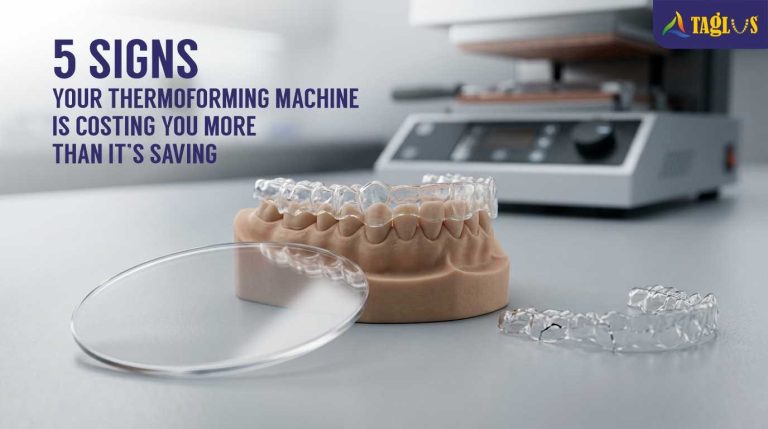
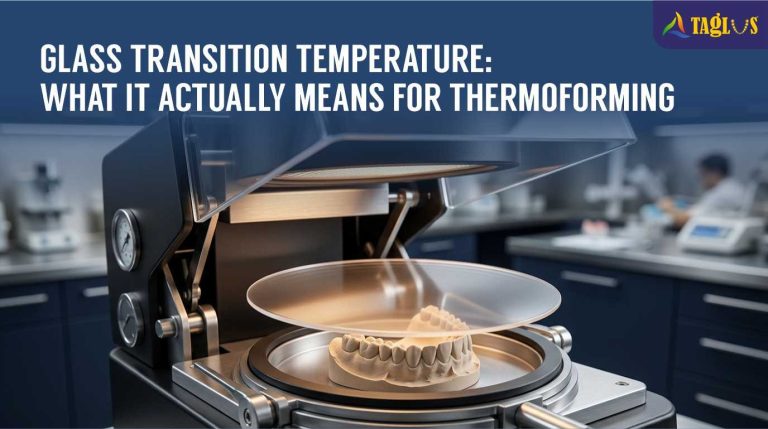
During thermoforming where the aligner is actually manufactured, things can quietly go wrong. If the thermoforming machine is not set to the right temperature or pressure, the sheet may not adapt fully to the model, leaving microscopic gaps. These gaps, even if they are not visible to the naked eye, reduce the contact surface between the aligner and the tooth, weakening the force delivery. The trimming of the aligner after thermoforming also matters more than most people realise. An inconsistent trim line, especially one that does not follow the gingival margin correctly, affects retention and stability during wear.
How to Manage Issues in the Digital Workflow:
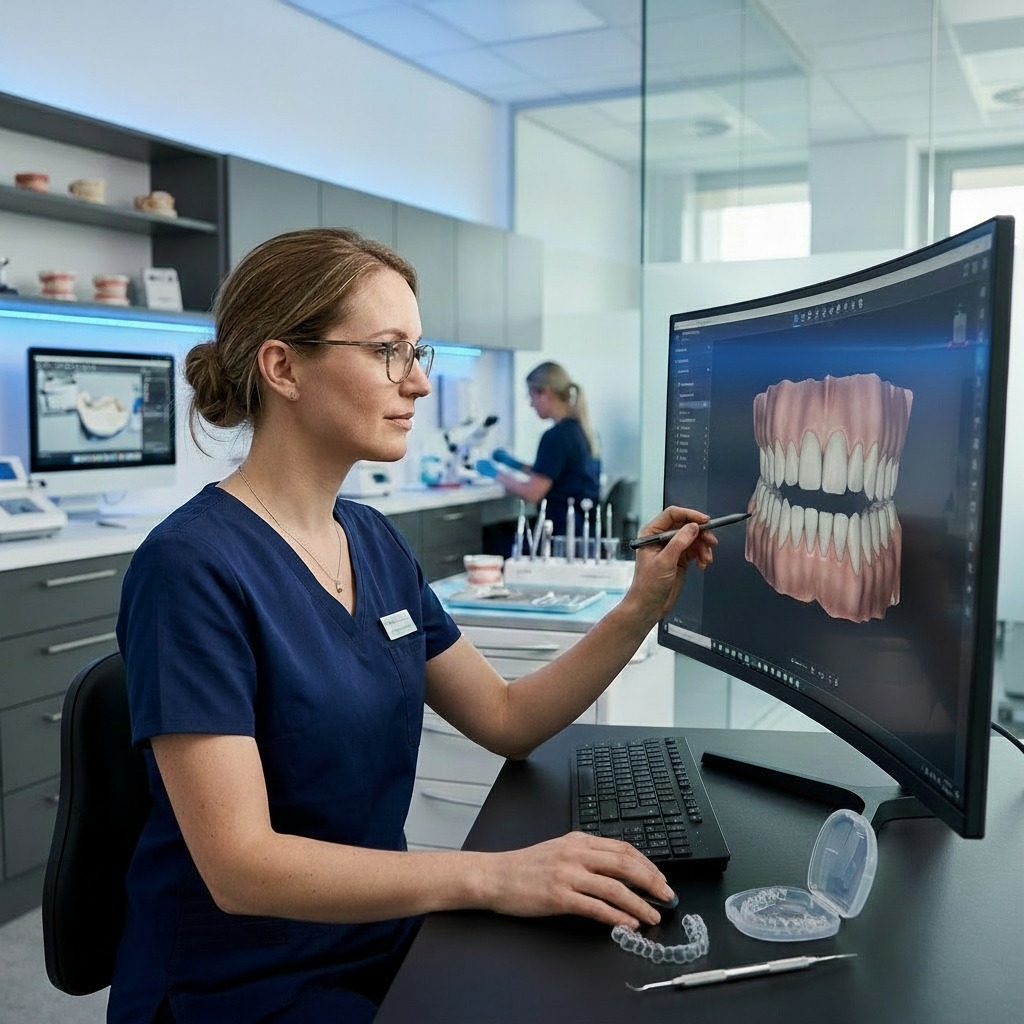
The good news is that most of these errors are preventable, or at least manageable, once you know where to look.
Regular scanner maintenance and periodic accuracy checks go a long way. If your practice does a high volume of aligner cases, it is worth investing in a scanner having stitching error detection using AI. Reviewing scans immediately after they are taken, rather than sending them off straightaway, allows you to rescan areas that look suspicious.
On the planning side, investing time in learning the software matters. Many clinicians rely heavily on default settings, which may not always suit the specific case at hand.
Learning to adjust overcorrection values, staging, and attachment design takes time, and there is genuinely a learning curve to it. But once you are familiar with those settings for different case types, you will likely notice a real difference in how predictably your cases track.
For model printing, keeping a log of calibration dates and resin batch information can save you a lot of problems at a later stage. Changing resin before it expires and running occasional test prints on a reference model does not take long, and it can catch drift before it affects a patient case.
As for thermoforming, machine settings are the kind of thing that are easy to set once and then never think about again, which is exactly when errors tend to creep in. A quick periodic check and a note of what settings you are running can make a bigger difference than most people expect.
The material you use matters here, too. A sheet that thermoforms predictably and adapts well to complex anatomy reduces the margin for error considerably.
Conclusion:
Clear aligner therapy, when it works well, is genuinely rewarding for both clinicians and patients. But, it is worth noting that the path to predictable outcomes runs through every single step of the digital workflow. Therefore, it is worth checking every step regularly. Compliance will always be a factor, but workflow integrity is something that stays entirely within your control.
This is also where a reliable digital aligner workflow partner like Taglus can take away a lot of trials and errors and bring efficiency to your workflow. Trusted by dental labs and clinicians globally, Taglus is one of the most trusted manufacturers of thermoforming sheets, thermoforming machines, resins, and more. Whether you are planning to upgrade to an end-to-end digital workflow or trying to keep up with growing outputs, our team is ready to guide you at every step. Contact us today.
Have Questions?
 Talk to us on WhatsApp
Know More About Us
SignUp To Our Newsletter And Get To Know More About Taglus

Taglus is the global industry leader in the manufacturing of innovative clear Aligner and retainer thermoplastic sheets.

Copyrights@taglus-2026
*Taglus is a trademark of Vedia Solutions
Leave a Reply