


Enquire Form
Understanding Hard & Soft Dental Sheets: A Complete Guide
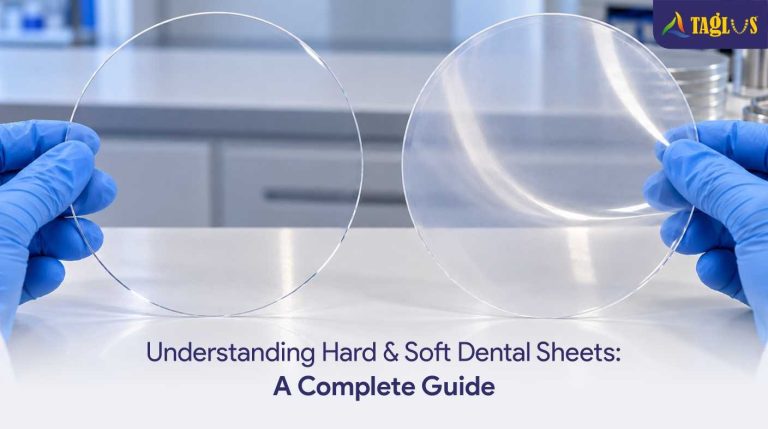
Walk into a dental lab, and you will find a wide range of thermoforming sheets on the shelf. Some are stiff and crystal clear. Others are flexible, almost rubbery. Some are laminated from more than one material. They all get heated and formed over a model, but the appliances they make are very different.
For anyone new to dental thermoforming, the first step in making sense of all this is understanding the difference between hard and soft sheets. This guide covers the basics.
What Are Dental Thermoforming Sheets?
Dental thermoforming sheets are flat sheets of thermoplastic material. When heated, they become pliable, and when they are drawn over a dental model with vacuum or pressure and later cooled, they hold the shape of the model they were formed over.
That simple principle is used for a surprisingly wide range of appliances, including clear aligners, retainers, night guards, sports mouthguards, bleaching trays, and surgical or diagnostic guides. The sheet chosen for each one has a big influence on how it looks, feels, and performs.
Why “Hard” and “Soft” Matter
Hard and soft are shorthand for how rigid or flexible a material is. That one property shapes several things at once:
- How firmly will the appliance hold its shape.
- How much force will it deliver.
- How comfortable it will feel in the mouth.
- How well will it absorb impact.
- How long will it last under regular wear.
It will also affect the thermoforming process itself, because different materials respond differently to heat, forming pressure, and cooling.
Hard Sheets: Structure and Stability
Hard sheets are made from stiffer thermoplastic material. Once formed, they hold their shape well and resist deformation.
What they are known for:
- High stiffness and dimensional stability
- Good shape retention after forming
- High clarity and a smooth surface finish
- Good resistance to wear
Where they are commonly used: Clear aligners, retainers, diagnostic and surgical guides, and other appliances where accurate shape and controlled force matter.
The trade-off: Due to their thickness, they become more difficult to insert and remove, and they may not offer much cushioning to the oral tissues.
Soft Sheets: Comfort and Cushioning
They are made from flexible, elastic materials. They bend and compress easily and have a cushioned feel.
What they are known for:
- Flexibility and elasticity
- A comfortable feel
- Shock absorption
- Easier insertion and removal in many cases
Where they are commonly used: Sports mouthguards, soft night guards, bleaching trays, and other protective or cushioned appliances.
The trade-off: A softer material gives less shape control and rigidity, so it is more suited for applications that do not need firm force delivery. Also, it may wear or deform sooner.
Hard vs. Soft at a Glance
| Hard Sheets | Soft Sheets | |
| Feel | Firm, rigid | Flexible, cushioned |
| Shape retention | High | Lower |
| Impact absorption | Lower | Higher |
| Typical clarity | Often high | Varies by material |
| Common uses | Aligners, retainers, guides | Mouthguards, soft night guards, bleaching trays |
These are general tendencies. Individual materials and formulations can behave quite differently from one another.
A Note on Hardness Scales
Hardness is commonly described using a durometer scale, where a higher number generally means a harder material. Different scales can also be used, so numbers should not be compared directly. When comparing sheets, check that you are looking at the same scale.
Thickness matters just as much as the material. A thicker sheet will generally feel stiffer than a thinner sheet of the same material. And the thickness printed on the sheet is not necessarily the thickness of the finished appliance. During thermoforming, the sheet stretches unevenly over the model, so some areas end up thinner than others. The final feel of an appliance comes from both the material and how it was formed.
The Third Option: Dual-Layer and Multilayer Sheets
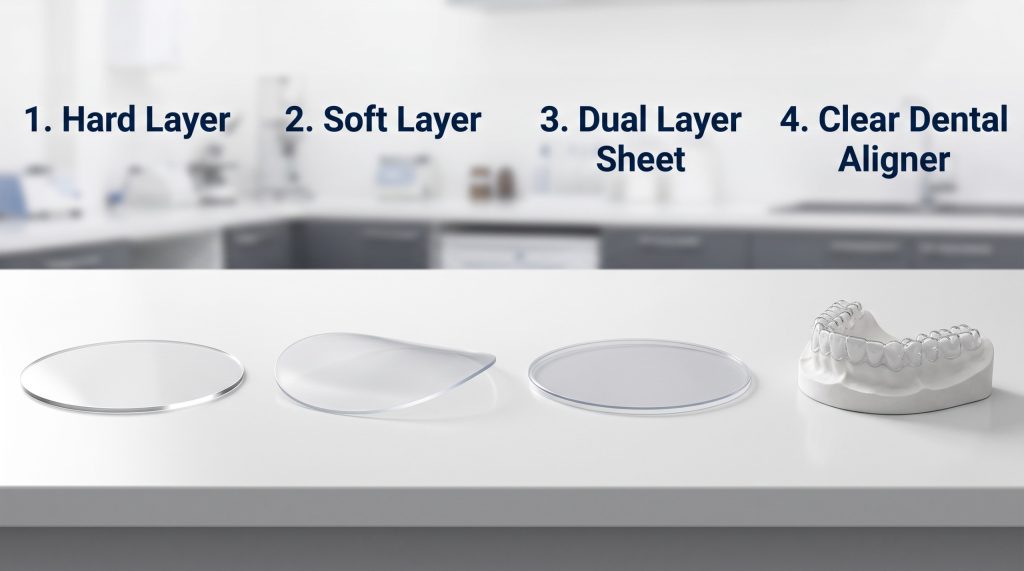
If hard sheets offer structure and soft sheets offer comfort, it is natural to ask whether you can have both.
That is the idea behind dual-layer and multilayer sheets, which combine materials of different hardness into one structure. A typical example is a hard outer layer paired with a soft inner layer, meant to balance durability with comfort. These are frequently used for appliances such as night guards, so that the patient gets both benefits.
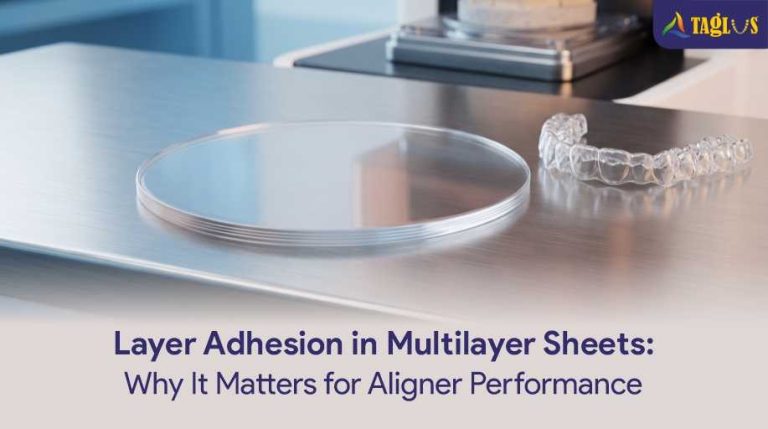
The performance of these sheets depends heavily on how well the layers are bonded. When the layers stay unified, it behaves as one engineered sheet. When they separate, that balance is lost.
How to Choose the Right Sheet
There is no universally best option. The right sheet depends on what the appliance needs to do.
Ask yourself:
- What is the appliance for? Shape control, protection, comfort, or a combination of these?
- How long and how often will it be worn? Wear time affects choice.
- Who is the patient? When parafunctional habits like grinding or sensitivities exist, decisions need to be made considering them.
- What has the clinician specified? Treatment requirements should always guide material choice.
- Does the material suit your equipment? Sheets need to work with your thermoforming machine and settings.
For any specific case, the final recommendation should come from the treating clinician and the material manufacturer’s guidelines.
Common Beginner Mistakes
- Assuming soft means better. Comfort is important, but too much flexibility can compromise the function of some appliances.
- Assuming hard means better. Rigidity is valuable in the right application, but not for everything.
- Ignoring thickness. The same material can behave very differently at different thicknesses.
- Using one set of parameters for every sheet. Different materials respond differently to heat, pressure, and cooling.
- Overheating or overstretching. This can impact the appearance and performance of the material, including its clarity.
- Forgetting about the model and the machine. The sheet is only one part of the equation.
The Sheet Is One Piece of a Larger Workflow
Choosing between hard and soft sheets is a major decision, but it sits inside a larger process. Scanning, planning, 3D printing, thermoforming, trimming, and finishing all influence the final appliance, and the accuracy of one stage affects what is possible in the next. hard and soft sheets is an important decision, but it sits inside a larger process. Scanning, planning, 3D printing, thermoforming, trimming, and finishing all influence the final appliance, and the accuracy of one stage affects what is possible in the next.
That is why consistency matters, both in the material and in how it is processed.
Hard and Soft Dental Sheets at Taglus
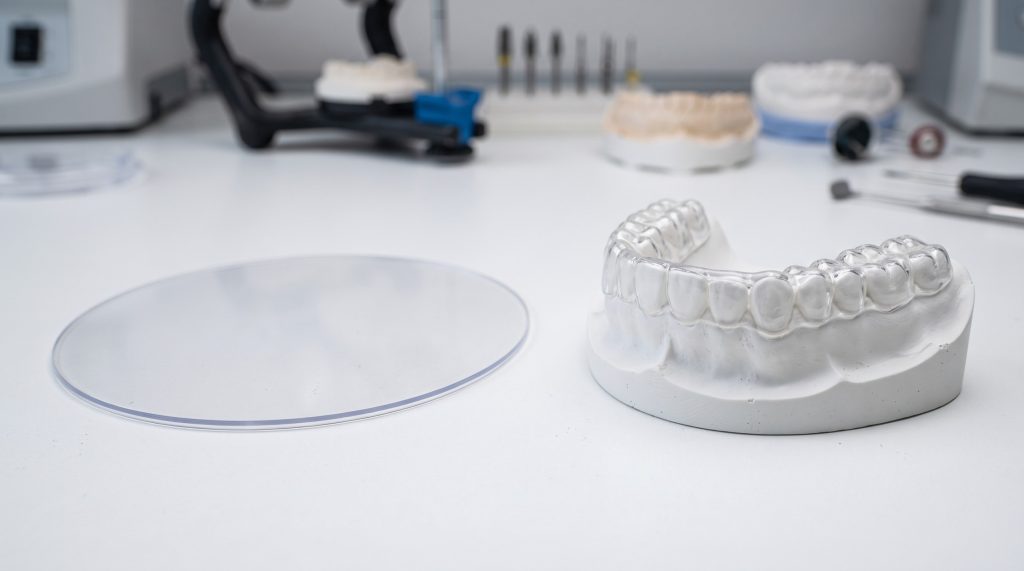
At Taglus, we look at materials as part of a complete manufacturing workflow rather than isolated products. Thermoforming sheets, dental materials, equipment, 3D printing solutions, and trimming systems are designed to support a connected production environment where consistency can be maintained at every stage.
Because knowing the difference between hard and soft sheets is a great place to start. But turning the right sheet into a reliable appliance takes material science, process control, and precision working together.
Want to learn more about Taglus materials and thermoforming solutions? Get in touch with our team to find the right options for your workflow.
Have Questions?
 Talk to us on WhatsApp
Know More About Us
SignUp To Our Newsletter And Get To Know More About Taglus

Taglus is the global industry leader in the manufacturing of innovative clear Aligner and retainer thermoplastic sheets.

Copyrights@taglus-2026
*Taglus is a trademark of Vedia Solutions
Leave a Reply