


Enquire Form
5 Signs Your Thermoforming Machine Is Costing You More Than It’s Saving
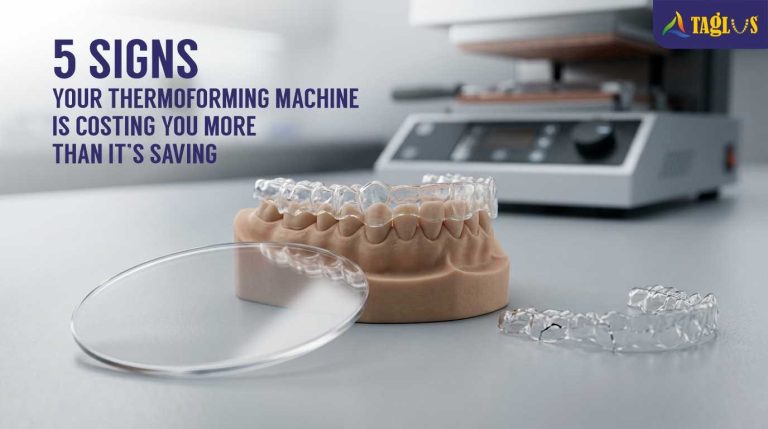
Thermoforming is central to modern aligner production. The right machine can increase the output, reduce manual intervention, and help you meet rising case volumes. But a thermoforming machine is only an asset when it delivers consistent, production-ready output.
If heating is unstable, suction is weak, maintenance is delayed, or operators are constantly compensating for machine behavior, your equipment may be creating hidden costs. These costs rarely appear as one large expense. They accumulate through wasted sheets, additional labor, delayed cases, time, quality checks, reprocessing, and remakes.
Here are five signs that your thermoforming machine may be costing your lab more than it is saving.
1. Your remake rate is increasing
A rising remake rate is one of the clearest signals that something in the production process deserves investigation.
Poor appliance adaptation, unexpected gaps, dimensional inconsistencies, excessive thinning, or cracking during finishing can have multiple causes. These may include material selection, model quality, forming parameters, machine performance, trimming, or handling.
If remake rates are increasing, do not automatically blame the machine. Instead, investigate the complete forming process:
- Is the machine reaching and maintaining the intended forming conditions?
- Are material-specific parameters being followed?
- Is the model positioned consistently?
- Is forming pressure or vacuum performing as expected?
- Are the same quality criteria being applied by every operator?
- Has a material, thickness, or workflow change been introduced without revalidation?
The objective is to identify the source of variation before it becomes a recurring production cost.
2. Operators repeatedly override or adjust settings
Some process adjustments are normal. The warning sign is repeated operator intervention to compensate for inconsistent results.
Possible causes include:
- The machine has not reached stable operating conditions.
- Heating is uneven or temperature measurement is inaccurate.
- Forming pressure or vacuum is inconsistent.
- Seals, filters, clamps, or other forming components require inspection.
- The selected parameters have not been validated for the material and thickness.
- Different technicians rely on different visual cues.
- A material or thickness change was introduced without process revalidation.
The goal should not be to eliminate every adjustment. It should be to establish a repeatable, validated process that produces consistent results.
3. Heating, vacuum or pressure is inconsistent
If the heating or forming process is not controlled, the finished appliance can show variations in adaptation, thickness, surface characteristics, or dimensional behavior.
Research confirms that thermoforming can change the physical and mechanical properties of orthodontic thermoplastic materials. However, these changes are material- and thickness-dependent; studies have reported both increases and decreases in properties such as flexural modulus and hardness after thermoforming.
Potential signs of excessive or uncontrolled heating
- Visible distortion or abnormal surface changes
- Unusual variation in material behavior between cycles
- Excessive localized thinning
- Changes in forming or finishing behavior
Potential signs of insufficient or inconsistent forming conditions
- Poor adaptation to the model
- Incomplete reproduction of model detail
- Gaps or areas of inadequate adaptation
- Increased finishing or adjustment requirements
4. Material waste and failed cycles are increasing
A thermoforming machine can increase output while also increasing waste if the process is not controlled.
Excessive sheet waste may result from:
Excessive material waste can be associated with:
- Incorrect sheet positioning
- Poor model alignment
- Incomplete forming
- Cracking during removal or finishing
- Excessive or unexpected thinning
- Material sticking or tearing
- Contamination
- Premature removal from the model
- Failed forming cycles
- Machine downtime or interrupted production
Laboratories often focus on the purchase price of the thermoforming sheet. But the real cost of a failed forming cycle is higher.
5. Maintenance happens only after quality drops
Reactive maintenance is one of the most expensive habits in a production environment. If the machine is serviced only after it stops working, the lab is using quality failures as a maintenance warning.
Common areas that deserve routine attention include:
- Dust and material residue
- Filters
- Seals and potential leaks
- Cables and electrical connections
- Heating performance
- Forming pressure or vacuum performance, depending on the machine
- Clamps and trays
- Vacuum-pump performance on applicable systems
- Power-supply stability
Taglus recommends regular cleaning, leak checks, cable inspections, temperature monitoring, vacuum-pump checks and clamp/tray inspections as part of routine thermoforming-machine maintenance.
Is automation still worth it?
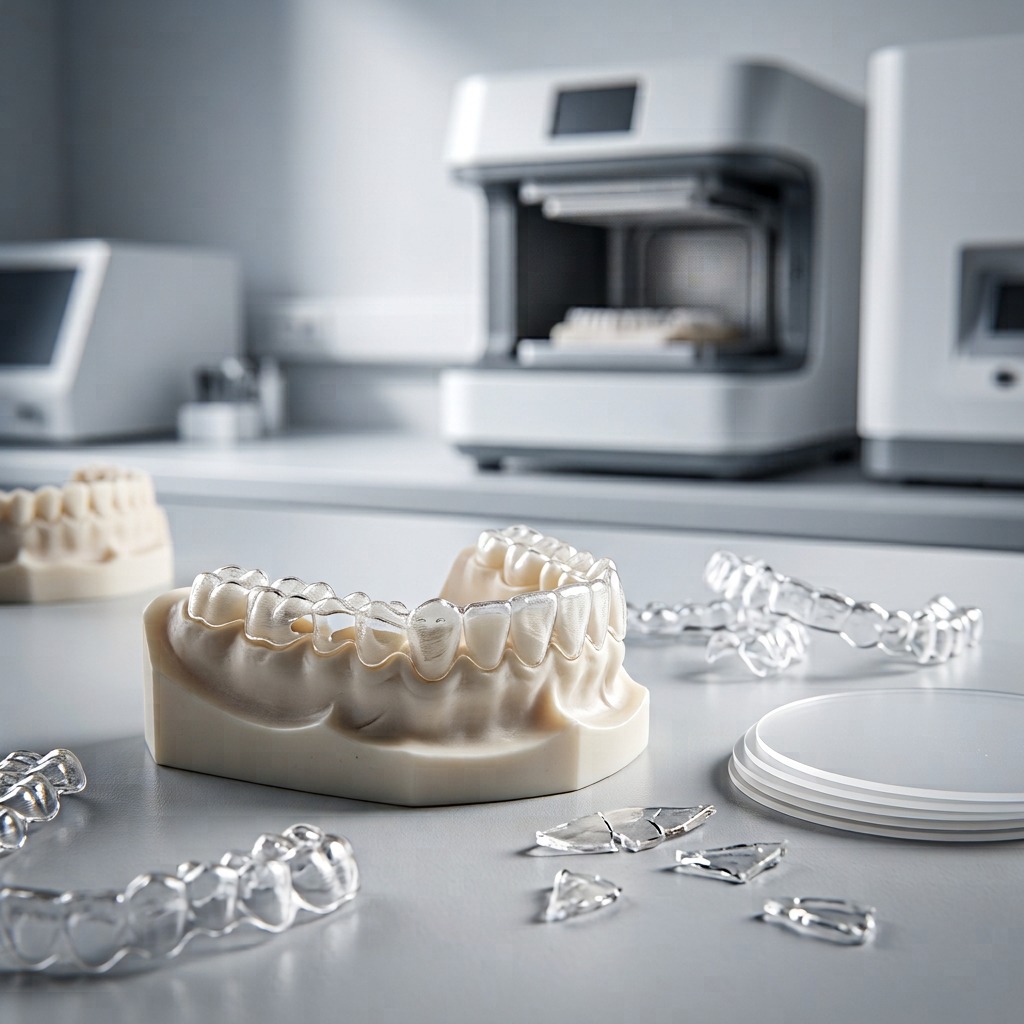
Yes, when it gives measurable consistency. Automation can help manage growing volume, reduce repetitive manual work, shorten turnaround time, and standardized production.
The fastest machine is not necessarily the most efficient machine if it produces a high percentage of appliances requiring rework.
How do you know if your thermoforming machine is paying off?
A thermoforming system is delivering value when it helps your laboratory achieve measurable improvements such as:
- Consistent output across production cycles
- Predictable forming across batches
- Low and stable remake rates
- Better material utilization
- Stable turnaround times
- Reduced manual intervention
- Repeatable quality-control results
- Higher production capacity without compromising quality
These metrics can help you determine whether your current equipment is supporting the business or quietly adding cost to every case.
A thermoforming machine should reduce the cost by improving speed, repeatability, and production capacity. The answer is not always replacing the machine. In many cases, the solution begins with better calibration, stronger maintenance, material-specific settings, clean workflows, and measurable quality control.
Have Questions?
 Talk to us on WhatsApp


Know More About Us
SignUp To Our Newsletter And Get To Know More About Taglus

Taglus is the global industry leader in the manufacturing of innovative clear Aligner and retainer thermoplastic sheets.

Copyrights@taglus-2026
*Taglus is a trademark of Vedia Solutions
Leave a Reply