


Enquire Form
Double-Side Masking: A Practical Guide for Dentists and Labs
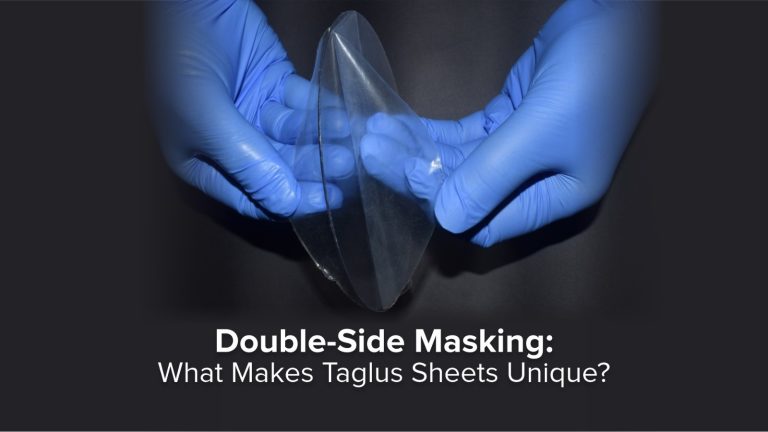
In the world of clear aligners, clinicians often focus on material strength, force delivery, and transparency. Beyond all these factors, there is one additional and crucial factor that plays a very important role in making better aligners: dual protective masking.
Taglus being one of the most established manufacturers of aligners and retainers thermoforming sheets, understands the importance of maintaining hygiene, integrity, and optical clarity of the appliances even after thermoforming and thus designed the sheets with ultra-thin protective masking on both sides of the sheet.
This minor change helps the Taglus sheets to have a better appliance quality and easier workflow!
What Is Double-Side Masking?
Many thermoforming sheets available in the market are provided with only single sided masking that ultimately takes toll on one or other factor in the process of thermoforming.
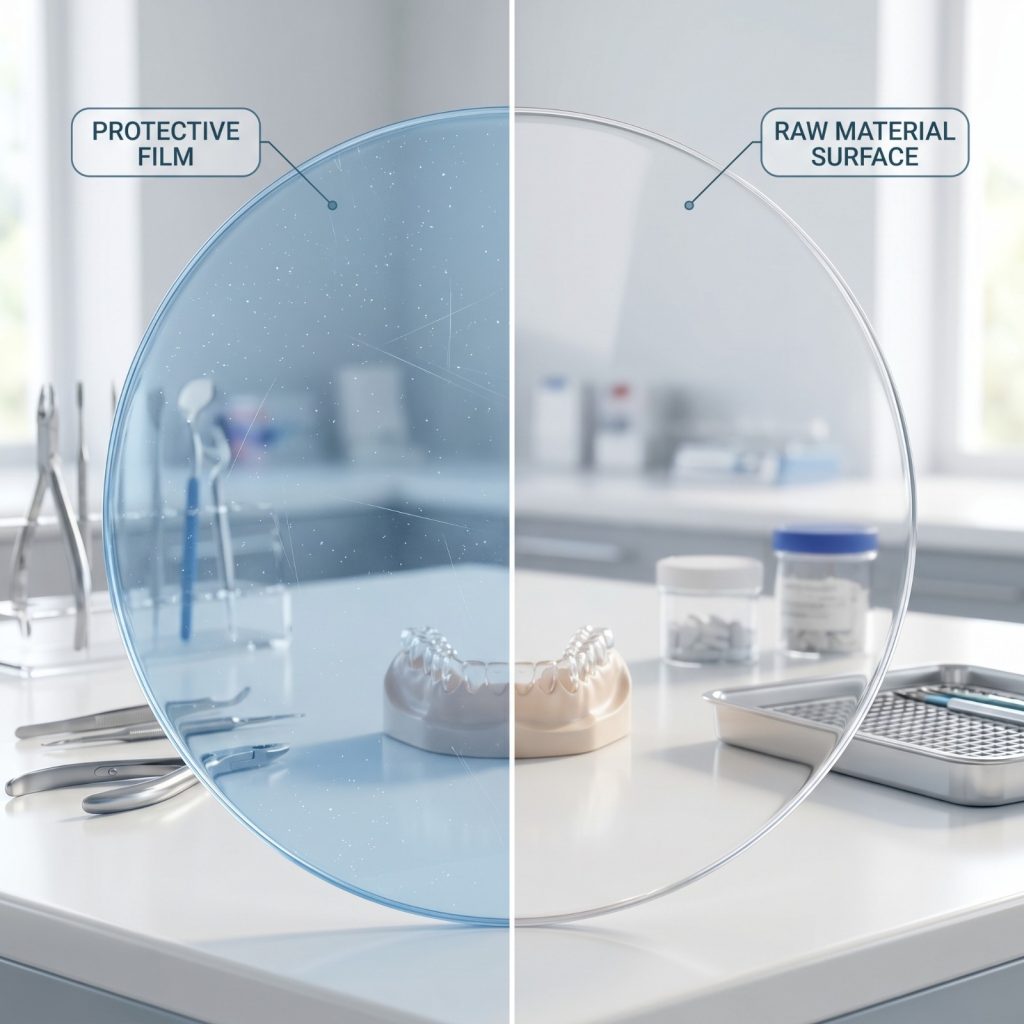
Double-side masking refers to a thin protective film applied to both surfaces of the thermoforming sheet.
The masking acts as a shield against:
- Surface scratches
- Dust contamination
- Moisture exposure
- Handling marks during storage and fabrication
- Visual artifacts like hazing
Why Does It Matter?
Maintaining Optical Clarity
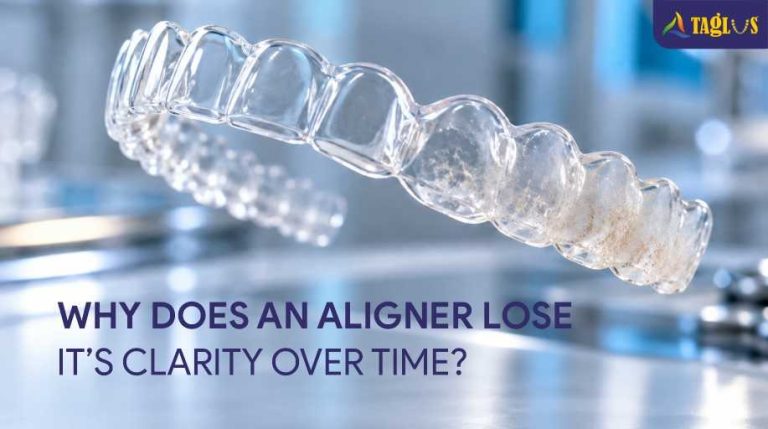
The primary factor for which Clear aligners are common and popular now-a-days is their optical clarity. Therefore, it becomes crucial to maintain the expected clarity as a priority.
Taglus sheets with double protective masking preserve the surface quality and clarity throughout storage and thermoforming as well, helping maintain excellent transparency in the finished aligner.
2. Reduces Dust and Contamination
The double masking helps aligner sheets to be at bay from minute dust particles and also maintain the hygiene and protection from resin residues or absorbing chemicals form models as well.
3. Improves Shelf Life
Moisture exposure can affect the performance of thermoforming materials over time.
Taglus incorporates moisture-resistant dual protective masking that helps preserve material quality during storage and transportation.
4. Protects During Finishing Procedures
Another benefit of dual masking is protection against accidental scratches and handling damage during fabrication.
Keeping the masking intact during fabrication provides an additional layer of protection until the appliance is ready for delivery.
some dentists even deliver the aligners or retainers to patients with these protective layers still in place for extra protection and then the patients can remove them before starting using them.
Common Mistake: Removing the Masking Too Early
Peeling off the protective film before thermoforming is a common mistake that many clinicians do which can compromise the final appearance of the aligner because:
- Dust can settle on the sheet
- Surface scratches become more likely
- Fingerprints may affect clarity
- Additional cleaning may be required
The Correct Way to Use Taglus Sheets
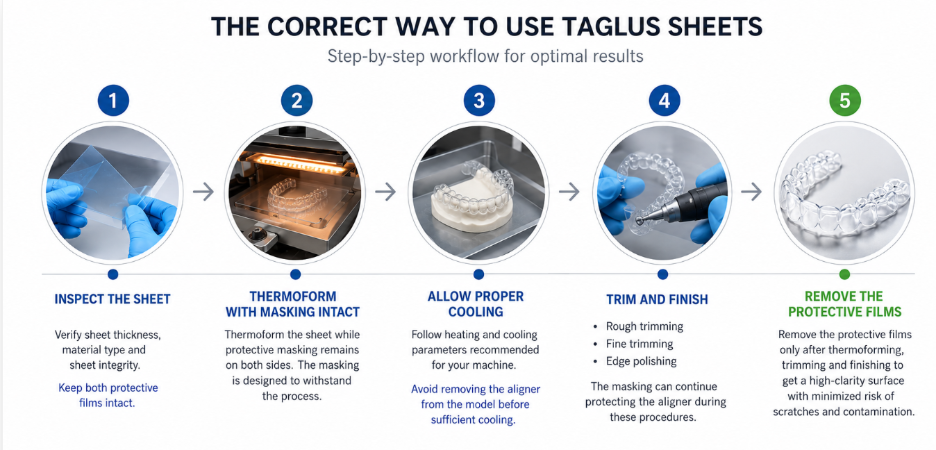
Step 1: Inspect the Sheet
Before thermoforming, verify:
- Sheet thickness
- Material type
- Sheet integrity
Keep both protective films intact before thermoforming.
Step 2: Thermoform With Masking Intact
Taglus recommends thermoforming the sheet while the protective masking remains on both sides. The masking is designed to withstand the thermoforming process and continue protecting the material surface.
Step 3: Allow Proper Cooling
Follow the heating and cooling parameters recommended for your thermoforming machine.
Avoid removing the aligner from the model before sufficient cooling has occurred.
Step 4: Trim and Finish
Complete:
- Rough trimming
- Fine trimming
- Edge polishing
The masking can continue protecting the aligner during these procedures.
Step 5: Remove the Protective Films
The protective films should be removed only after thermoforming, trimming, and finishing have been completed to get a final high-clarity surface with minimized risk of scratches and contamination.
Which Taglus Materials Feature Dual Protective Masking?
Dual protective masking is incorporated across multiple Taglus thermoforming materials, including:
- Taglus Premium
- Taglus Standard
- Taglus Tuff
- Various thermoforming solutions within the Taglus portfolio
This consistent design philosophy helps deliver predictable appliance quality across different clinical applications.
Clinical Benefits for Dentists
For orthodontists and in-house aligner providers, double-side masking contributes to:
- Better Aligner Aesthetics: Protects the sheet surface from scratches, dust, and handling marks, helping maintain excellent clarity in the final appliance.
- Reduced Remakes: Minimizes the risk of damage during storage to delivery
- Improved Workflow : Provides added protection throughout the fabrication process.
While force delivery and biomechanics remain essential for treatment success, patients often judge aligners first by how clear and clean they look. Dual-side masking helps ensure that the appliance delivers both clinical performance and a premium visual appearance.
In a Nutshell
Taglus’ dual-side masking helps preserve one of the most important features of clear aligners: exceptional transparency. Other than that, it protects the sheet from moisture, dust, scratches, and handling damage throughout the fabrication process, helping clinicians and labs consistently produce clearer and more professional-looking aligners.
The key takeaway is simple: keep the masking on during thermoforming and finishing, remove it only at the final stage, and let the material deliver the clarity it was designed for.
Have Questions?
 Talk to us on WhatsApp

Know More About Us
SignUp To Our Newsletter And Get To Know More About Taglus

Taglus is the global industry leader in the manufacturing of innovative clear Aligner and retainer thermoplastic sheets.

Copyrights@taglus-2026
*Taglus is a trademark of Vedia Solutions
Leave a Reply