


Enquire Form
How Automation Can Improve Efficiency in Aligner Production
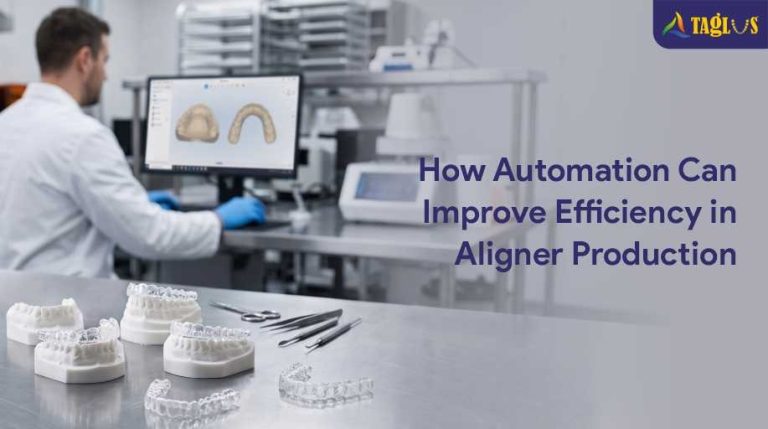
Aligner manufacturing has come a long way from a few cases produced by hand. As the demand for aligners grows, labs are asked to increase production, fabricate them faster and without sacrificing quality.
All of this is difficult to balance with a manual workflow. That is why automation is getting so much attention.
Where Efficiency Gets Lost in a Manual Workflow
Aligner production is a series of steps: scanning, treatment planning, 3D-printing, thermoforming, trimming, finishing, and delivery. All of this can be manually done, and at small volumes that often works.
But the challenge emerges when volumes start growing. Manual steps, which rely on humans, can have inconsistencies; two operators might work differently or have different steps. The work is repetitive and can become tiring, and the cumulative effect of small delays at every step can be significant when hundreds of aligners need to be produced.
The issue is rarely a bottleneck at one big step, but a culmination of many small ones.
What Automation Actually Means
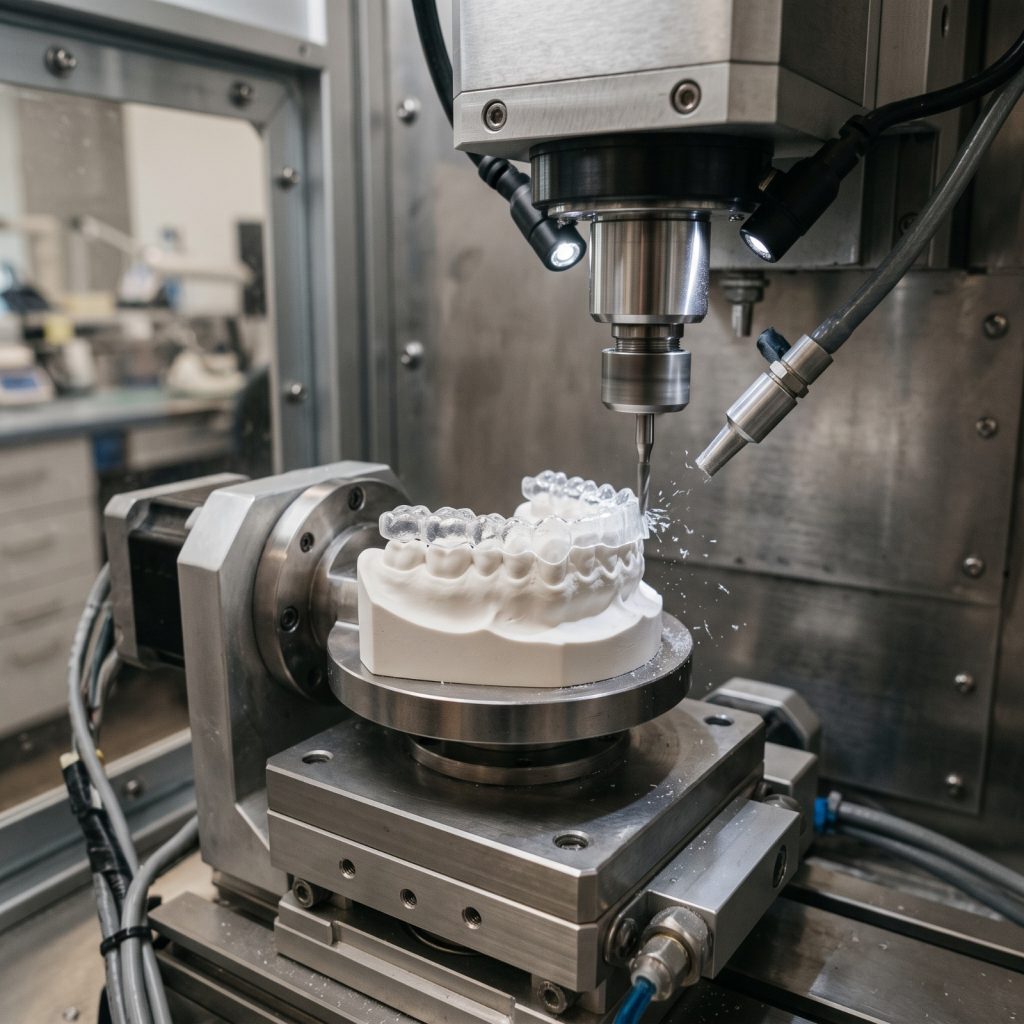
Automation does not always mean a fully automated lab, but rather a standardization of steps in a repeatable way.
That can include:
- Automated thermoforming with controlled heating and forming parameters
- Automated or CNC-based trimming of formed aligners
- Batch printing and handling of 3D printed models
- Digital tracking of cases through each stage of production
The point is to free the operators from repetitive tasks, so they can focus on work that needs real human judgment, such as quality control and problem-solving.
Where Automation Makes the Biggest Difference
Thermoforming
Thermoforming has many variables: heating, forming pressure or vacuum, timing, and cooling. Even small changes in these will change how a sheet adapts to the model.
Automation helps to standardize these forming parameters and hence makes them easily repeatable. This is important considering the effect thermoforming has on the stretch of the material over the model and how uniform an aligner is formed.
Trimming
Trimming is where the excess of the thermoformed sheet is cut, and it starts looking like an aligner. This is a step where manual variation can easily be identified. Differences in cutting line or edge finish vary between operators and hence between aligners.
Dedicated trimming equipment helps standardize these cutting paths and finished edges, and it helps support higher production volumes without depending on single operator efficacy.
3D Printing and Model Handling
Because the aligner is formed over the physical model, its quality directly affects the result. Automating parts to print them and post-processing their workflow helps labs produce models in larger, more predictable batches.
Case Tracking and Workflow Management
As volumes grow, keeping track of cases becomes a challenge. Digital tracking of cases helps ensure they move through the right steps, reduces mix-ups, and gives an idea of where the work is in the process.
The Benefits of Automation
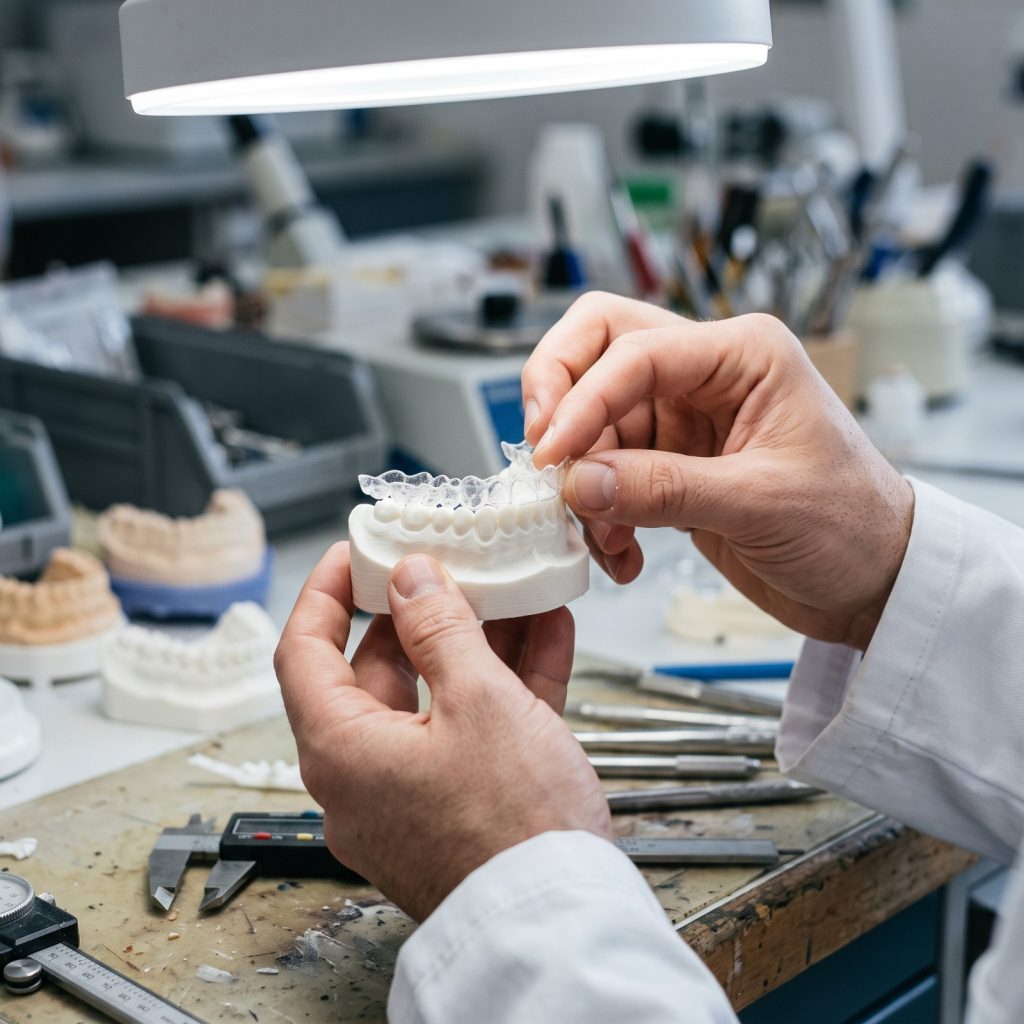
While results depend on the specifics and the systems in use, the general advantages are well understood.
Consistency. Having the same process repeated reduces the variance between each step, operator, and shifts.
Throughput. Automated steps can be run in batches and with less manual intervention, helping labs handle higher volumes.
Less repetitive manual work. Operators spend less time on repetitive tasks and more on inspection and quality control.
Traceability. Standardized, tracked workflows make it easier to identify where an issue began if something goes wrong.
Scalability. A standardized workflow is easier to expand than one that relies on individual techniques.
Automation Only Works If the Whole Workflow Fits Together
It is tempting to solve a problem by adding one machine. But an automated thermoformer cannot make up for a poor-quality model, and a precise trimming system cannot fix a poorly formed sheet.
Scan quality, treatment planning, printing, thermoforming, trimming, and finishing all influence one another. The accuracy of one stage affects what is possible in the next.
Materials matter here, too. Automated processes rely on repeatability, which means the sheet itself needs to be consistent in thickness and properties. When it is tuned for one material, it may not perform identically with another, so parameters should be set with the specific material in mind.
What Should Labs Consider Before Automating?
Automation being an investment, it is important to understand it in the context of current conditions and future goals. Some considerations to help:
- Where are the current bottlenecks? Start with the steps that cost the most time or introduce the most variation.
- What is the production volume? The benefits are generally greater as volume increases.
- Does the equipment work with your materials? Compatibility between sheets, machines, and settings is important.
- How well will the systems integrate? Equipment that works together will reduce handoff problems between stages.
- Is the process repeatable? Look for the ability to reproduce the same parameters across many cycles.
- What support and training are available? Good onboarding helps teams use the equipment effectively.
- Can it scale? Consider whether the setup will be able to grow with your production needs.
Common Mistakes to Avoid
- Automating a faulty process. If a workflow has inconsistencies, automation may simply repeat them faster. Standardize the process first.
- Focusing on one machine. Improving a single step without considering the rest of the chain will probably move the bottleneck elsewhere rather than remove it.
- Overlooking material consistency. Repeatable processes work best with predictable materials.
- Skipping quality checks. Automation supports quality control, but it does not replace it. Inspection remains an important part of manufacturing.
- Underestimating training. Even automated systems need people who understand them.
The Bigger Picture
As aligner production continues to grow, efficiency is no longer only about working faster. It is about working consistently, at scale, with fewer surprises.
Automation is one of the ways to get there. But it works best as part of a connected workflow, where materials, digital planning, printing, thermoforming, and trimming are designed to work together rather than as isolated components.
Automation and the Connected Workflow at Taglus
At Taglus, we look at aligner manufacturing as a complete workflow rather than a set of separate machine operations. From thermoforming sheets and dental materials to thermoforming equipment, 3D printing solutions, and trimming systems, the goal is to support a connected production environment where consistency can be maintained across every stage.
Because efficiency is not only about speed. It is about material science, process control, machine performance, and precision working together at any volume.
Want to explore how automation can fit into your production? Get in touch with the Taglus team to learn more about our materials and thermoforming solutions.
Have Questions?
 Talk to us on WhatsApp

Know More About Us
SignUp To Our Newsletter And Get To Know More About Taglus

Taglus is the global industry leader in the manufacturing of innovative clear Aligner and retainer thermoplastic sheets.

Copyrights@taglus-2026
*Taglus is a trademark of Vedia Solutions
Leave a Reply