


Enquire Form
Understanding the Relationship Between Aligner Fit and Treatment Accuracy
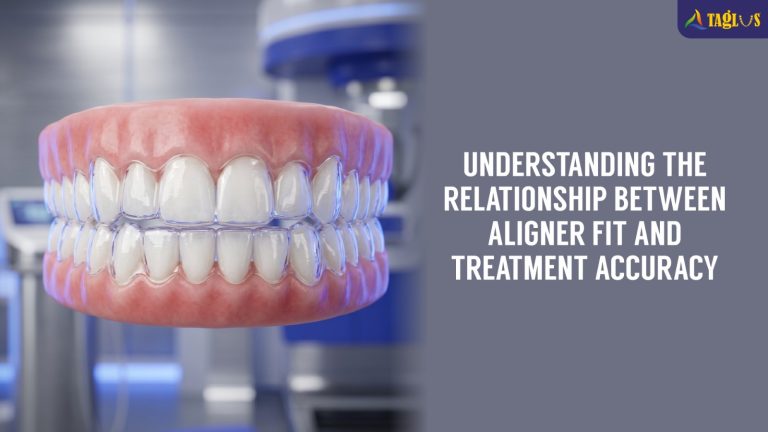
Could invisible gaps be silently affecting your aligner treatment outcomes? It sounds like a small thing, but the fit of a clear aligner matters far more than most people realise. Whether you’re a dental professional prescribing aligner treatment or a company manufacturing aligners, understanding the relationship between aligner fit and treatment accuracy could genuinely change how you look at the whole process.
Relationship Between Aligner Fit and Treatment Accuracy: More than Just a Comfort Issue
When people think about aligner fit, they tend to think about comfort first. Does it feel tight? Is it digging in somewhere? But fit goes much deeper than that. A well-fitting aligner isn’t just more comfortable to wear. It’s the very mechanism through which planned tooth movements are delivered.
Each aligner tray is designed to apply specific, calibrated forces to specific teeth at specific angles. When the tray sits flush against the tooth surface, those forces transfer the way they’re supposed to. When there is even a small gap between the aligner and the tooth, the force may not land where it should, and the tooth doesn’t end up moving exactly the way it was programmed to.
Over a single tray, that might not seem like a big deal. But aligners work in sequences. Each tray builds on the movement from the last. If a tooth hasn’t moved quite right by the time the next tray arrives, the new tray is already starting from the wrong position. These small inaccuracies tend to compound rather than correct themselves.
The Importance of Accurate Aligner Fit During Treatment:
You don’t need a major fit issue to take the aligner treatment off track. Even minor fit problems can have a noticeable impact on treatment outcomes. We are not talking about dramatic misalignments. Even small discrepancies, the kind that might not be visible to the naked eye, can be enough to hamper the tooth movement.
Tracking refers to how closely a tooth’s actual position matches the position predicted by the treatment planning software. When a tooth is tracking well, it’s moving in line with the plan. When it isn’t, the clinical team needs to step in. That might mean refinements, additional attachments, or extending treatment beyond the original timeline.
There are a few reasons why fit inconsistencies happen in the first place. The quality and behaviour of the material used to fabricate the aligner play a significant role. If a sheet doesn’t adapt tightly enough to the model during thermoforming, or if it loses its shape over time, the resulting aligner won’t exert force the way it was intended to. Temperature, pressure, and stress relaxation all feed into this.
Wear time is another factor. Patients who remove their aligners more frequently than recommended, or who don’t seat them properly each time they reinsert, introduce variability into an already precise process. Seating tools and chewies exist for a reason, and it might be worth discussing their use with patients who seem to be struggling with tracking.
Attachment design and placement also matter here. Attachments help the aligner grip teeth with certain geometries or movement requirements. If they are placed inaccurately, or if the aligner doesn’t engage them consistently, that’s another potential gap between what was planned and what’s actually happening.
It’s worth noting that different tooth movements are more sensitive to fit inconsistencies than others. Torque movements and root control, for instance, tend to be more demanding. If a patient has a treatment plan that involves a lot of these, a precise aligner fit becomes even more critical.
What Happens When Fit Falls Short

When fit issues are caught early, they are usually manageable. Most experienced clinicians check tracking at regular intervals and can intervene before things go too far off course. The challenge is that fit issues aren’t always immediately obvious. A tray might appear to be sitting well at a glance, but still have small zones where contact is inconsistent.
Patients who don’t report discomfort aren’t necessarily tracking well, and those who do report discomfort aren’t necessarily tracking poorly. This is part of what makes aligner treatment more nuanced than it might seem from the outside.
The downstream effects of poor fit include longer treatment times, more refinement rounds, and, in some cases, outcomes that fall short of what was initially planned. None of these outcomes is what either patients or clinicians want. Prevention, in this case, really does start at the material and fabrication stage.
Taglus Thermoforming Sheets
One area that doesn’t always get the attention it deserves is the quality of the thermoforming sheet used to produce the aligners. This is foundational. If the sheet doesn’t adapt precisely to the model, the aligner starts life already compromised.
Taglus thermoforming sheets are engineered to support precise adaptation and dimensional stability, which means they conform closely to the contours of the model and hold that shape consistently. This enables a more intimate fit between the aligner and the tooth surface, and better transfer of the programmed forces that drive tooth movement.
Reach out to the Taglus team today to find out more about how their thermoforming sheets can support better fit and more predictable treatment results.
In Summary:
The accuracy of aligner fit and its treatment outcomes are closely related. Small gaps, minor inconsistencies, and subtle material variations can all influence whether a patient ends up where the treatment plan intended. Getting the fit right, from fabrication through to daily wear, is one of the most practical ways to support better, more predictable outcomes across the board.
Have Questions?
 Talk to us on WhatsApp


Know More About Us
SignUp To Our Newsletter And Get To Know More About Taglus

Taglus is the global industry leader in the manufacturing of innovative clear Aligner and retainer thermoplastic sheets.

Copyrights@taglus-2026
*Taglus is a trademark of Vedia Solutions
Leave a Reply