


Enquire Form
Why Does an Aligner Lose Its Clarity Over Time?
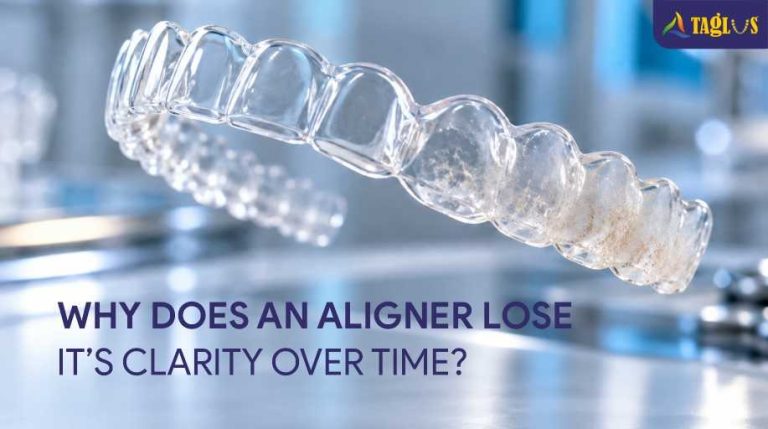
A new aligner is almost invisible. That’s why patients choose it. But many patients notice that after a few days of wear, the same aligner looks slightly cloudy, dull, or stained.
This is a common problem, and the answer cannot be attributed to a single cause. Clarity loss usually comes from a combination of material behavior, the oral environment, the patient’s habits, and how the aligner was manufactured.
Clarity Starts with the Materia
A thermoforming sheet is made to specific optical standards. At this stage, its transparency is easy to measure, because it is under controlled conditions.
But an aligner does not stay in controlled conditions. Once it is in the mouth, it is exposed to saliva, temperature changes, food and drinks, and constant mechanical contact. How well the material holds under those conditions depends on its composition, and different thermoplastic formulations can respond differently.
So, when clarity is discussed, it needs to ask two separate questions: How clear is the material on day one, and how well does it stay clear during wear?
Surface Deposits: The Most Common Culprit
In many cases, aligners “turning cloudy” is because of something on their surface.
Saliva contains proteins and minerals. Over time, they can form a thin film on the aligner. This happens because they sit directly against the teeth for many hours a day; it is an ideal place for this to happen. If they are not cleaned regularly, it could lead to plaque buildup or mineral deposits.
The result is a dull or whitish appearance that can look like a material problem, even when the plastic underneath is still clear.
Staining from Food and Drink
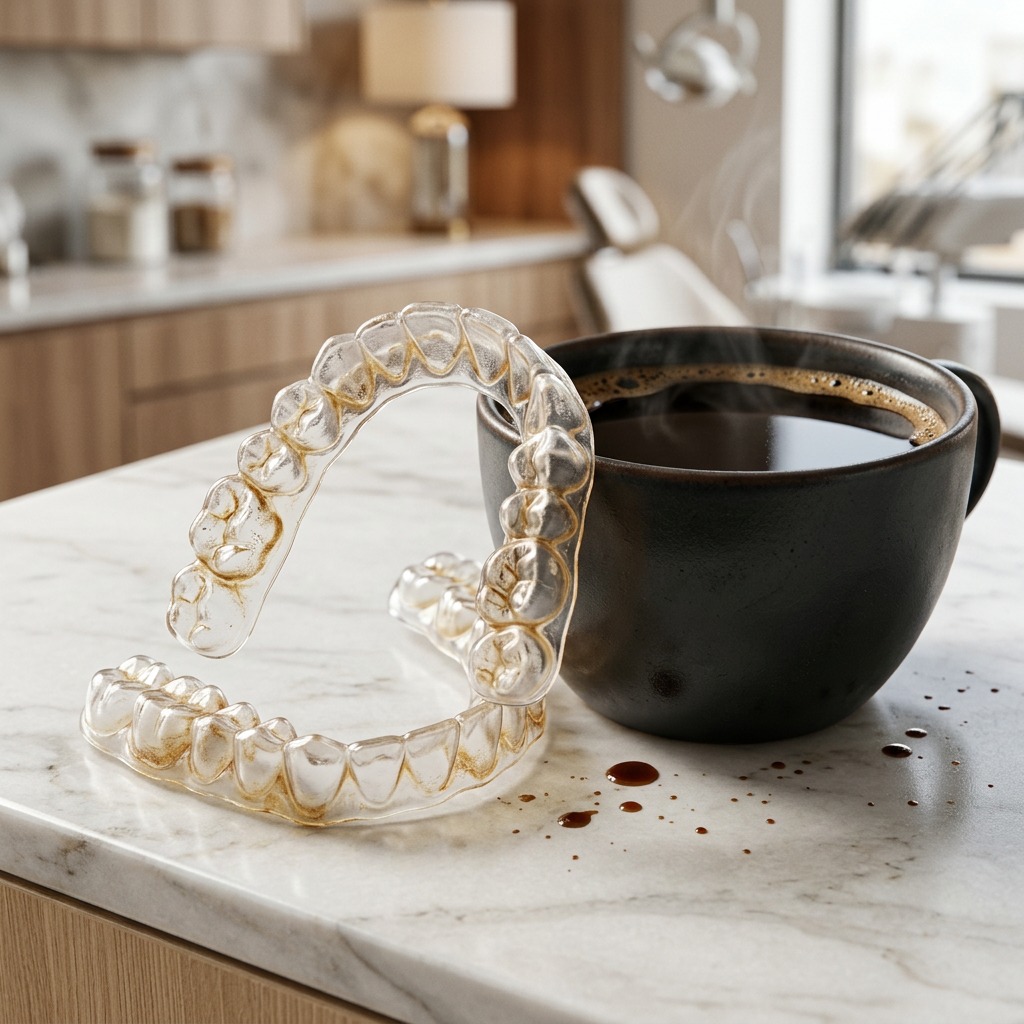
Aligners are meant to be removed when eating and drinking anything other than water. When that does not happen, pigments from coffee, tea, red wine, dark sauces, and similar foods can settle on the surface and sometimes seep into it.
This doesn’t mean that staining is entirely dependent on the patient’s habits. Material properties also play a role. A smoother, more stain-resistant surface is generally easier to keep clear than one that is easily marked.
Micro-Scratches and Surface Wear
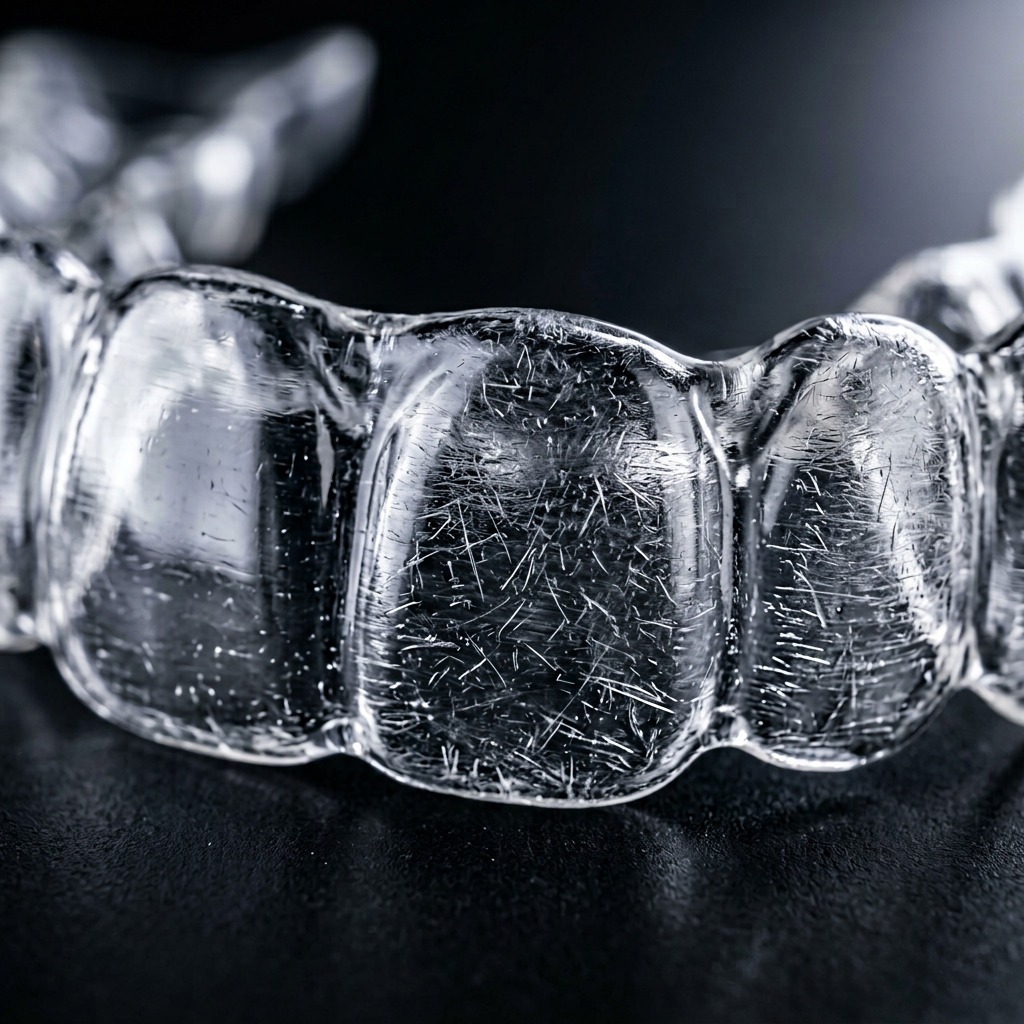
A surface that looks smooth to the eye may not be perfectly smooth in reality. Every time an aligner is inserted, removed, brushed, or exposed to chewing and grinding forces, tiny scratches are formed.
Individually, they are almost invisible. But together they will scatter light, and it can be perceived as haze.
This is also why the cleaning method matters. Abrasive toothpaste or a hard-bristled brush can help remove deposits but can also roughen the surface, which can make clarity worse rather than better.
Moisture and Temperature
Aligners spend most of the day in a warm, wet environment, and that has some effect on it. Some materials absorb moisture, and temperature swings from hot and cold drinks add further to the stress.
Hot water is especially dangerous: it is often used in an attempt to disinfect the aligner, but in reality, it can deform it and affect transparency. This is why most manufacturers indicate that aligners should only be rinsed in cool or warm water.
Cleaning Products Can Play a Role
Not all cleaning products are equally suitable for all materials. Harsh chemicals, strongly colored products, and certain mouthwashes can all interact with an aligner’s surface.
Patients are often keen to keep it clean, but the method matters as much as the effort. Cleaning instructions that come from the aligner or material manufacturer are worth following.
Manufacturing Also Affects Clarity
Clarity is not only about what happens in the mouth. It also depends on how the aligner was made.
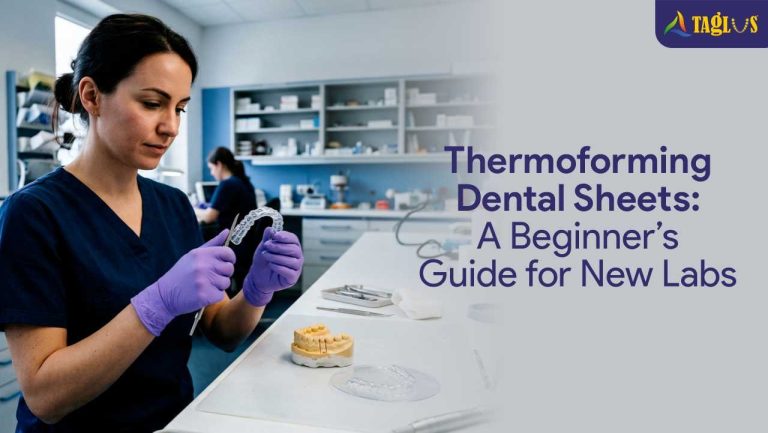
During thermoforming, the sheet is heated, stretched, and cooled over a model. If heating is uneven or excessive, or if forming conditions are not well controlled, the material can be stressed in ways that affect its appearance. Areas that are stretched more can also look different from areas that are stretched less.
This is one reason why two laboratories using the same sheet can produce aligners with different optical results.
For multilayer materials, there is one more factor: the bond between layers. If layers begin to separate, light scatters at the interface, and this can show up as bubbles, cloudiness, or white patches.
What Can Be Done to Help Maintain Clarity?
There is nothing that can keep an aligner looking perfectly clear forever, but several simple actions will greatly reduce the risk of cloudiness appearing.
For patients:
- Clean it regularly, using a soft brush and mild, non-abrasive products.
- Rinse them with cool or lukewarm water, and avoid hot water.
- Remove aligners before eating or drinking anything other than water.
- Brush teeth before putting aligners back in.
- Store them in their case when they are not worn.
For laboratories and manufacturers:
- Choose materials with proven optical stability, not just good initial clarity.
- Follow recommended heating and forming parameters.
- Avoid overheating or overstretching the sheet.
- Handle and store sheets carefully to avoid surface contamination.
- Check finished aligners for early signs of haze or stress marks.
When Is Loss of Clarity a Concern?
Some change in the appearance of an aligner over the course of wear is expected since it is worn for tens of hours per week. However, a rapid deterioration in clarity, especially when accompanied by bubbles, streaks or lifting of the edges, is a sign of a problem.
This is worth flagging to the manufacturer or supplier, because it helps identify whether the cause lies in the material, the process, or how it is being cared for.
Clarity Is a Result of the Whole Workflow
The optical properties of an aligner can hardly be attributed to one factor alone. Although the material is the basis of an aligner, the way it is processed determines its characteristics. In addition, individual care also plays a role in maintaining optical properties.
When any one of those is out of balance, clarity is often one of the first things to show it.
Clarity and the Bigger Picture at Taglus
At Taglus, we look at aligner materials as part of a complete manufacturing workflow rather than as isolated components. Thermoforming sheets, dental materials, equipment, 3D printing solutions, and trimming systems all play a role in how consistently the final aligner performs, including how it looks over time.
Because a clear aligner is about starting clear. It is about staying that way, from the thermoforming machine to the end of the wear cycle.
Want to learn more about Taglus materials and thermoforming solutions? Get in touch with our team to explore how a connected workflow can support your production.
Have Questions?
 Talk to us on WhatsApp

Know More About Us
SignUp To Our Newsletter And Get To Know More About Taglus

Taglus is the global industry leader in the manufacturing of innovative clear Aligner and retainer thermoplastic sheets.

Copyrights@taglus-2026
*Taglus is a trademark of Vedia Solutions
Leave a Reply