


Enquire Form
Importance of Patient Comfort During Aligner Treatment
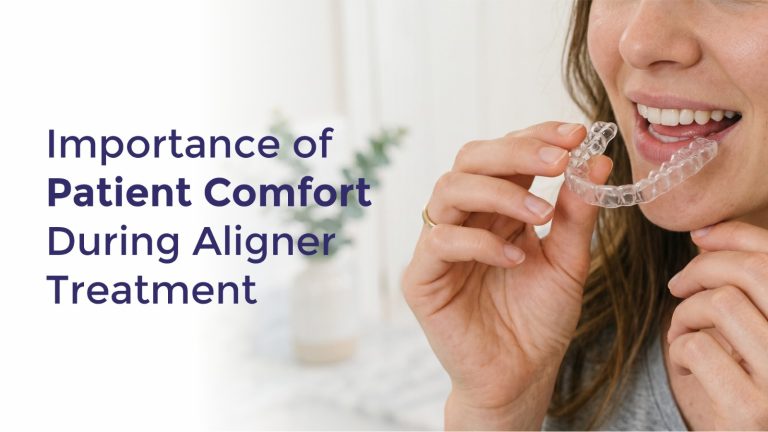
If you are an aligner manufacturer or a dental practitioner manufacturing in-house aligners for patients, you must have probably noticed something a little uncomfortable to admit. Treatments can be going brilliantly on paper, but patients can still drop off. They stop wearing their aligners as directed; they miss appointments, or they simply quit. And when you dig into the feedback, the complaints tend to follow a pattern. Sharp edges that irritate the tongue. Gum swelling that never quite settles. A general sense that something just does not feel right. That gap, between an expected aligner treatment journey and patients who actually finish their treatment happily, is largely a patient comfort problem. Dental professionals do not always openly talk about patient comfort during aligner treatment. Let’s discuss more about it.

What Happens When Patient Comfort During Aligner Treatment is Missing?
If you are seeing patients regularly through aligner treatment, the complaints you receive are probably not that surprising anymore. They tend to be repetitive, which is part of what makes them so worth addressing properly.
Patients mention sharp aligner edges that cut into the inside of their cheeks or sit uncomfortably against the gum line. They describe gum swelling that appears around certain teeth, especially during the first few days of a new set. Some mention that the aligner never quite feels like it sits flush, or that there is a rough spot they keep running their tongue over. Others just say it hurts more than they expected, without being able to pinpoint exactly where.
These are not dramatic complaints, and individually they might seem minor. But they add up. And they are worth taking seriously because of what happens when they are not addressed.
What Happens When Patient Comfort Takes a Back Seat?
The effects of poor comfort during aligner treatment tend to be fairly predictable, even if the exact pattern varies from patient to patient.
The first thing that tends to slip is compliance. When wearing aligners is consistently uncomfortable, patients find reasons not to wear them for the full recommended hours. They take them out during meals and forget to put them back in. They remove them for social situations and convince themselves that it will not make much difference. Over time, the hours add up, and the treatment starts to drift.
From there, the problems compound. Reduced wear time leads to loss of tracking, where the aligner no longer fits the current position of the teeth accurately. At that point, the clinical team often has to step in with midcourse corrections, which means additional trays, additional appointments, and a longer timeline overall.
Then there are the softer consequences, which are harder to quantify but no less real. Patients who are uncomfortable during treatment are less likely to leave positive reviews when it is over. They are less likely to recommend the clinic to friends or family. In a field where word of mouth still drives a significant portion of new patient enquiries, that matters.
So when patient comfort is compromised, it is rarely just a comfort issue. It tends to affect clinical outcomes, practice efficiency, and the practice’s reputation all at once.
What Is Actually Causing the Discomfort?
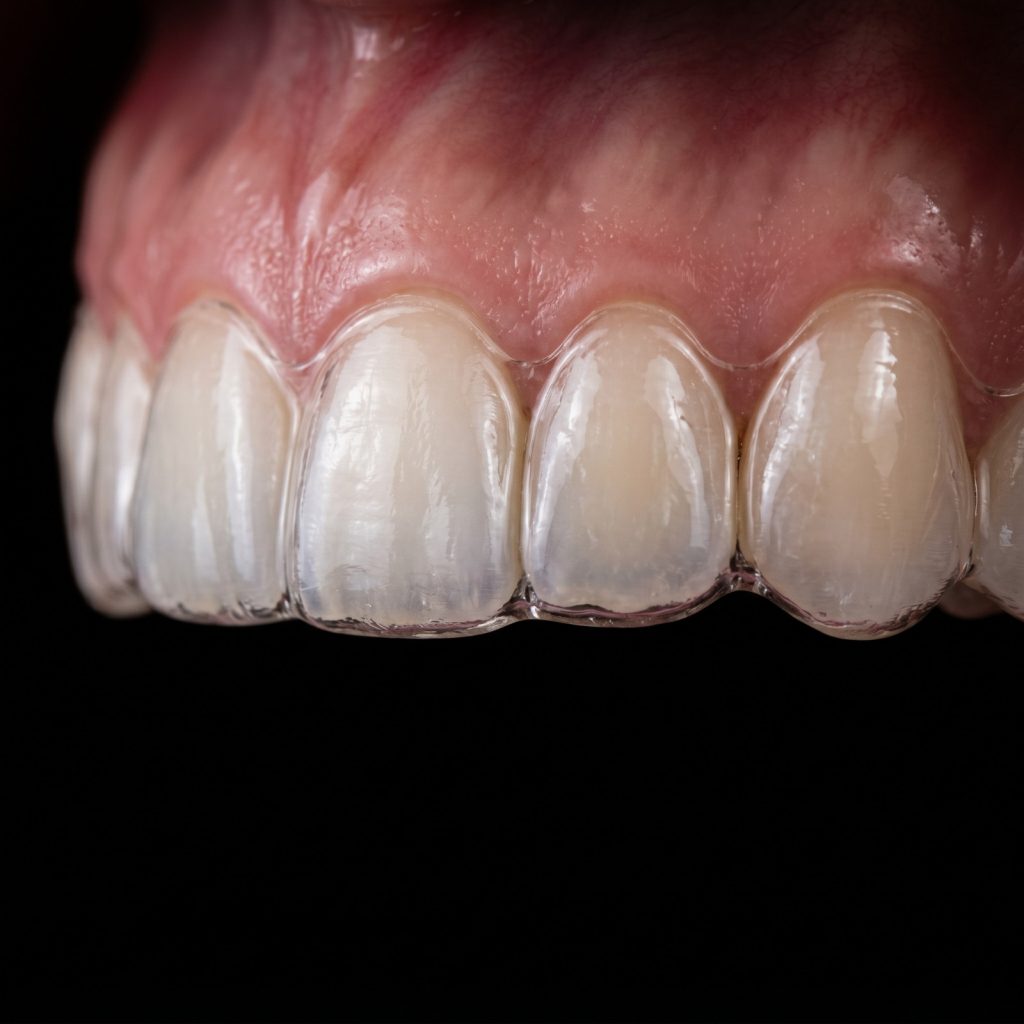
It is worth being honest about the fact that aligner discomfort does not always have one single cause. Some degree of pressure and tightness is expected and is actually a sign that tooth movement is happening. But the type of discomfort that patients complain about most often, the sharp edges, the gum irritation, the ill-fitting feel, tends to come from somewhere more controllable.
The material the aligner is made from plays a significant role. Sheets that are too rigid can create pressure points. Sheets that do not have the right flexibility profile may not conform well to the tooth surface, leaving gaps or creating uneven force distribution.
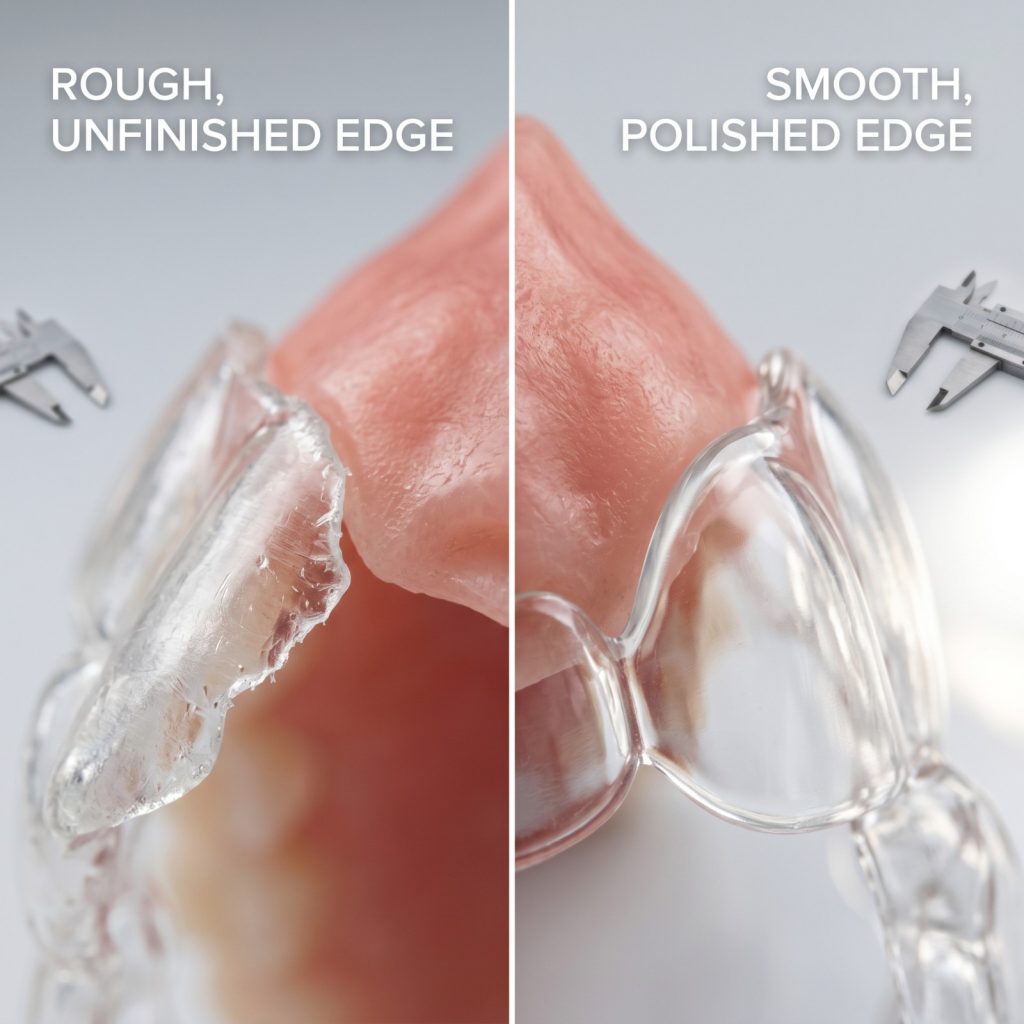
Trimming is another major factor that does not always get the attention it deserves. An aligner that has not been trimmed cleanly will have rough or jagged edges, and those edges will make themselves known every time the patient swallows, speaks, or simply moves their mouth. Even a small irregularity in the trim line can become a persistent irritant over the course of two weeks.
The Role of Materials and Trimming in Improving Comfort:
This is where the choice of aligner sheet and trimming technology plays an important role when it comes to patient experience.
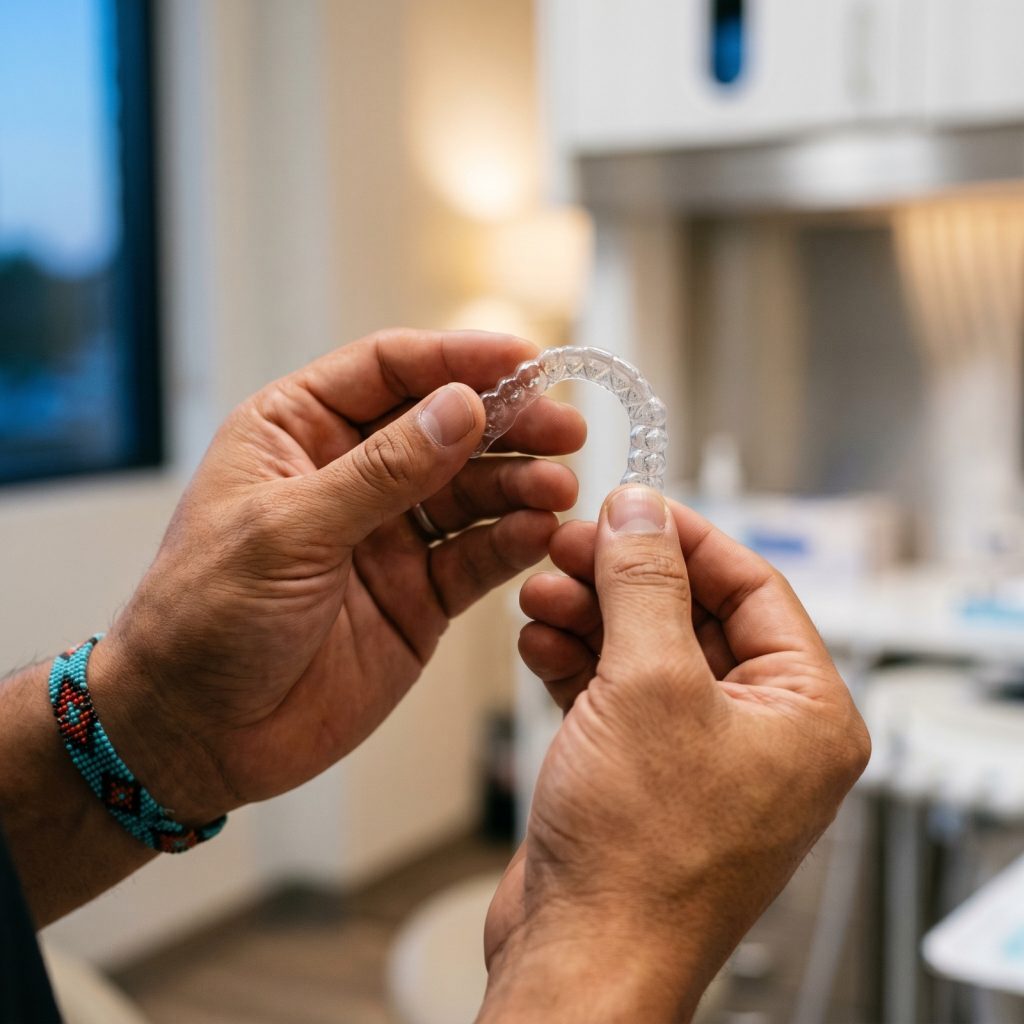
Taglus aligner sheets, including Taglus PU Flex and Taglus Premium, are designed whicle keeping the patient requirements in mind. The material properties aim to balance the controlled force needed for tooth movement with the kind of adaptability that makes an aligner comfortable to wear for 20 to 22 hours a day. When the sheet conforms well to the tooth anatomy, patients are less likely to experience the sharp pressure points or uneven fit that tend to drive complaints.
Trimming technology matters just as much. Taglus 5x Trim and LAC machines are built to deliver a clean, smooth finish along the aligner margin. That means fewer rough edges, fewer points of gum irritation, and less of the frictional discomfort that patients tend to describe but struggle to explain.
Together, these choices, the right material and precise trimming, contribute to an aligner that simply feels better to wear. And when the aligner feels better, patients wear it more consistently.
Comfort Is a Clinical Decision:
It is easy to think of patient comfort as something secondary, a nice-to-have rather than a clinical priority. But patient requirements suggest otherwise. Comfortable patients comply better. They track better. They finish their treatment closer to the original timeline. And they leave the experience feeling positive about the practice that treated them.
Investing in better materials and better trimming technology is, in that sense, an investment in clinical outcomes as much as it is in the patient experience. If you would like to explore how Taglus aligner sheets and trimming systems can support your aligner manufacturing requirements, get in touch to find out more.
Have Questions?
 Talk to us on WhatsApp

Know More About Us
SignUp To Our Newsletter And Get To Know More About Taglus

Taglus is the global industry leader in the manufacturing of innovative clear Aligner and retainer thermoplastic sheets.

Copyrights@taglus-2026
*Taglus is a trademark of Vedia Solutions
Leave a Reply