


Enquire Form
From Case Selection to Delivery – How to Optimize Your Clear Aligner Workflow
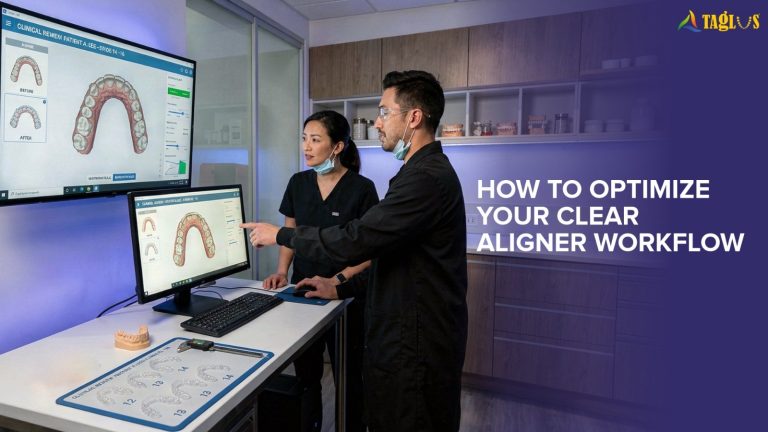
Let’s Clarify This That the Real Bottleneck Is Not Demand
Aligner demand is growing. Everyone knows that. But here’s what most people don’t say out loud. More cases do not mean better outcomes. In fact, for many labs and clinics, more cases mean more chaos. The perfect workflow sits back in the corner and what overshadows is
- Delays and communication gap
- More corrections
- More back-and-forth
And slowly, control starts slipping.
So the real problem is not demand. It is what your system does with that demand.
Where Workflow Actually Breaks
Aligner workflow rarely fails in one place. It leaks from multiple points in the clinic.
Here’s what usually goes wrong:
- Case intake is inconsistent. Scans, prescriptions, and planning inputs vary.
- If you opt for a non-certified material, then they may behave differently from batch to batch.
- Trimming varying with the user
- Aligner production timelines keep shifting.
And then everything starts piling up ending with:
- Delayed deliveries
- Cases that don’t match expectations
- Communication gaps between clinic and lab
- Reduced output despite higher effort
Quick Reality Check
| Stage | What You Expect | What Actually Happens |
| Case Intake | Clean, consistent data | Missing or variable inputs |
| Thermoforming or production | Smooth flow | Bottlenecks and delays |
| Delivery | Accurate fit | Adjustments and refinements |
The Core Issue: No System, Only Effort
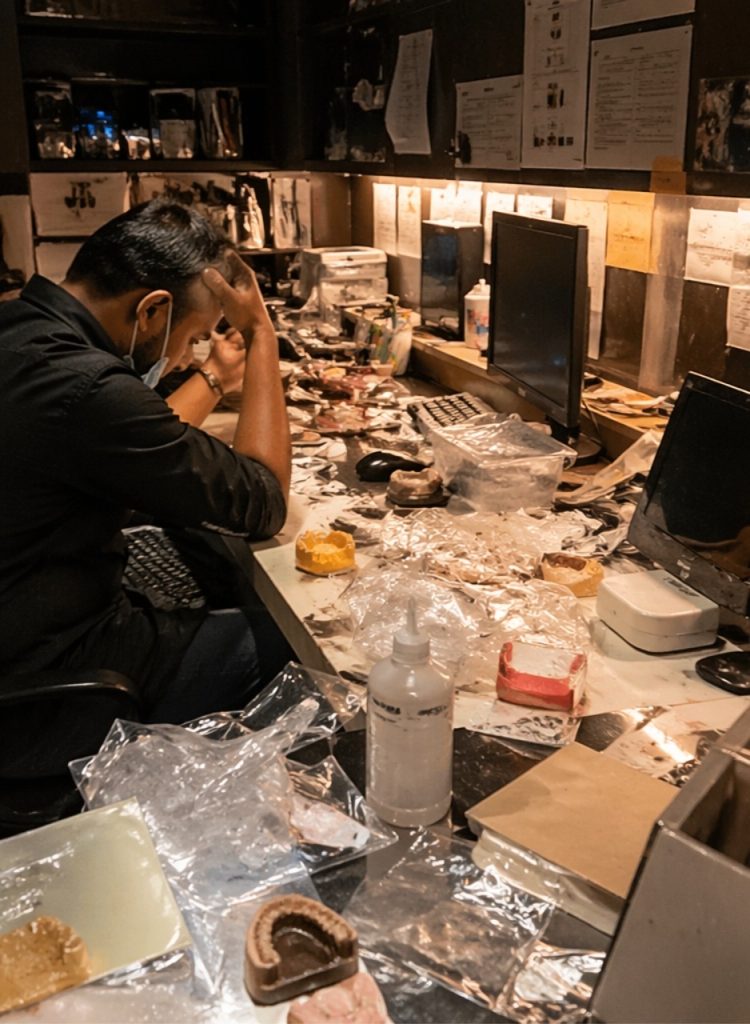
Most setups are still running on effort, not systems.
- Different and local materials for different cases
- Manual processes every where
- Output depends on the technician
This creates one big problem:variability and variability kills scale.
Because if every case behaves differently, you cannot grow without stress.
What an Optimized Workflow Actually Looks Like
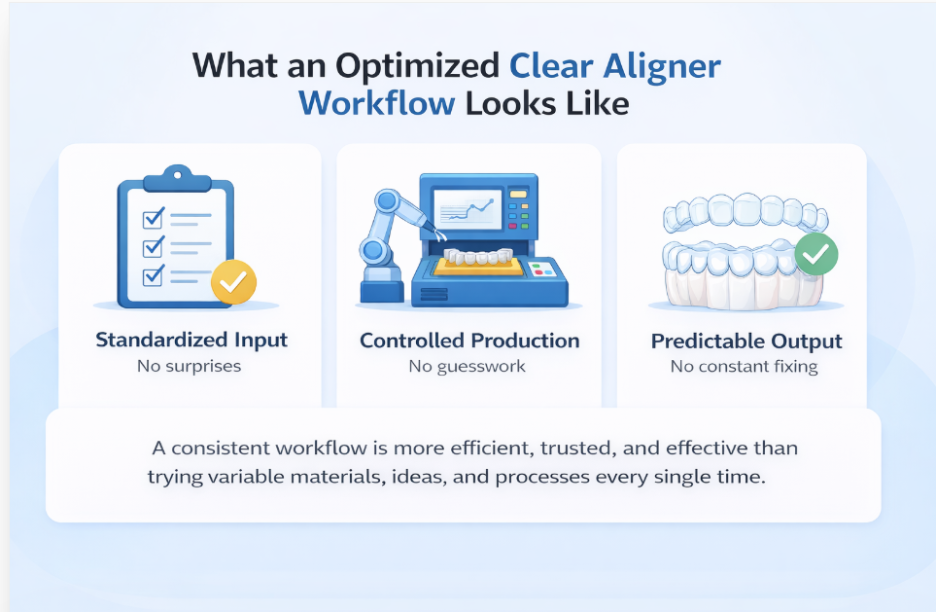
A strong workflow is not complicated. It is just consistent.
It stands on three things:
- Same, trusted, and certified material every time like Taglus
- Same process every time
- Same output expectation every time
That’s it.
Break it down simply:
- Standardized input → No surprises
- Controlled production → No guesswork
- Predictable output → No constant fixing
What Changes When You Fix This
| Before Optimization | After Optimization |
| Case-by-case variability | System-driven consistency |
| Reactive corrections | Planned execution |
| Delays and rework | Smooth turnaround |
| Stressful scaling | Controlled growth |
Where Labs Lose Maximum Efficiency
Let’s be practical. These are the real gaps.
1. Material Inconsistency
Different sheets, different behavior.
- Some over-stretch
- Some don’t adapt well
- Some lose form too quickly
Result:
- Poor fit
- More remakes
- Wasted chairside time
2. Manual Trimming
Even skilled hands create variation.
- Edges differ
- Margins are inconsistent
- Finishing takes extra time
Result:
- Patient discomfort
- Extra polishing
- Slower delivery
3. Lack of Automation
If everything depends on people, speed drops.
- Production slows
- Errors increase
- Scaling becomes stressful
How Taglus Fixes These Gaps
This is where system thinking comes in. Taglus does not just give you material.
It aligns material + machine + workflow.
1. Thermoforming That Stays Consistent
- Uniform heating
- Even pressure
- Accurate adaptation
So you don’t deal with:
- Warping
- Thickness variation
- Poor fit
2. Trimming That Doesn’t Depend on Skill
- Clean, repeatable margins
- Smooth edges
- Same finish every time
Which means:
- Better patient comfort
- Faster delivery
- Less manual correction
3. System-Level Consistency
When everything works together:
- Fewer remakes
- Faster turnaround
- Better case acceptance
You stop reacting, You start predicting outcomes.
What Taglus Changes in Real Terms
| Area | Without System | With Taglus |
| Material | Variable behavior | Consistent performance |
| Thermoforming | Unpredictable | Controlled and repeatable |
| Trimming | Manual variation | Automated precision |
| Output | Case-dependent | Standardized |
Clinical and Business Impact

This is where it actually matters.
For orthodontists:
- Cases move as planned
- Fewer chairside corrections
- Patients trust the process more
For labs:
- Output becomes stable
- Team stress reduces
- Scaling becomes possible
Why This Matters Right Now
Growth is happening whether systems are ready or not.
If your workflow is not structured:
- More cases = more problems
If your workflow is structured:
- More cases = more growth
Simple difference. Big impact.
Summary Table: Simple View
| Problem | What It Causes | What Fixes It |
| Inconsistent materials | Poor fit, rework | Standardized sheets |
| Manual trimming | Variability, discomfort | Automated trimming |
| No system | Delays, stress | Structured workflow |
| Reactive process | Constant corrections | Predictive workflow |
Final Thought
You don’t need more cases. You need a system that can handle the cases you already have. Once workflow aligns, everything else follows.
If you want to simplify your aligner workflow and actually scale without chaos, it is worth looking at how Taglus structures the entire process.
Have Questions?
 Talk to us on WhatsApp



Know More About Us
SignUp To Our Newsletter And Get To Know More About Taglus

Taglus is the global industry leader in the manufacturing of innovative clear Aligner and retainer thermoplastic sheets.

Copyrights@taglus-2026
*Taglus is a trademark of Vedia Solutions
Leave a Reply