


Enquire Form
Understanding multilayer aligner materials and their performance benefits. Explain multi-layer sheets vs single-layer
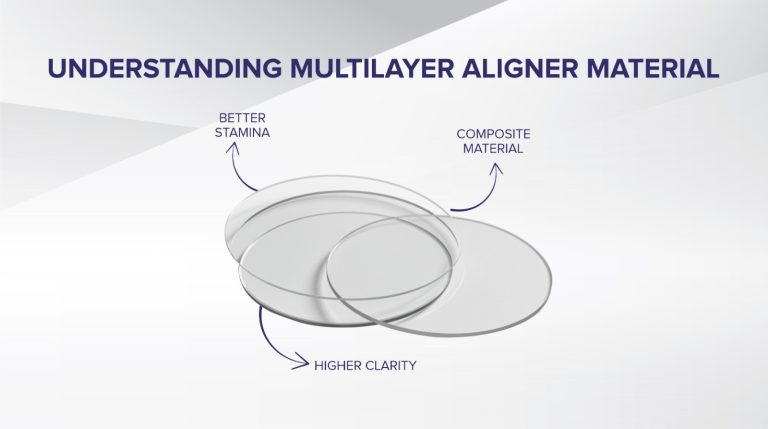
Clear aligners are the most trending treatment in recent times, and they have become the dental treatment modality that showed the highest CAGR in the past decade and promises the same in the coming years.
The successful treatment of aligners starts even before the scan, while choosing the aligner materials. Patients are usually unaware of material science, and it’s their dentists’ duty to choose the best material for the case specification and aligners’ sheet manufacturers’ responsibility to justify the sheets as per functional requirements and treatment of nature. In this case, Taglus not only brings the latest innovative sheets, certified, and robust materials but also helps the dentists and lab to execute cases with full guidance and confidence without any doubts on the material nature.
The Gamut of Aligner Materials and Why Multilayered Materials Stand Out
The aligner materials play a very significant role in shaping the pathway of treatment, prognosis and even patient compliance. Till some time ago, single-layered materials like PET-G and PU were ruling the aligner industry, but slowly, with continuous innovations, research, and tested trials, the latest entry of multilayered material has changed the game.
Multilayered material has two layers for multitasking and handling two different functions, along with executing different roles for a successful treatment. These two layers consist of one harder outer layer and a soft inner layer for a cushioning effect.
The soft inner layer helps to seat the aligner with a comfortable and perfect fit. It also exerts constant orthodontic force without getting material fatigue; this is the hero layer for giving constant and consistent results in clear aligner treatment.
The rigid outer layer gives uniform stability to the aligners and also makes them resistant to an irritable oral environment, like saliva and physical pressure, like chewing-induced degradation, as well as the capacity to bear the thermoforming pressure and its potential effects.
What Are the Key Benefits of Multi-layered Aligner Materials
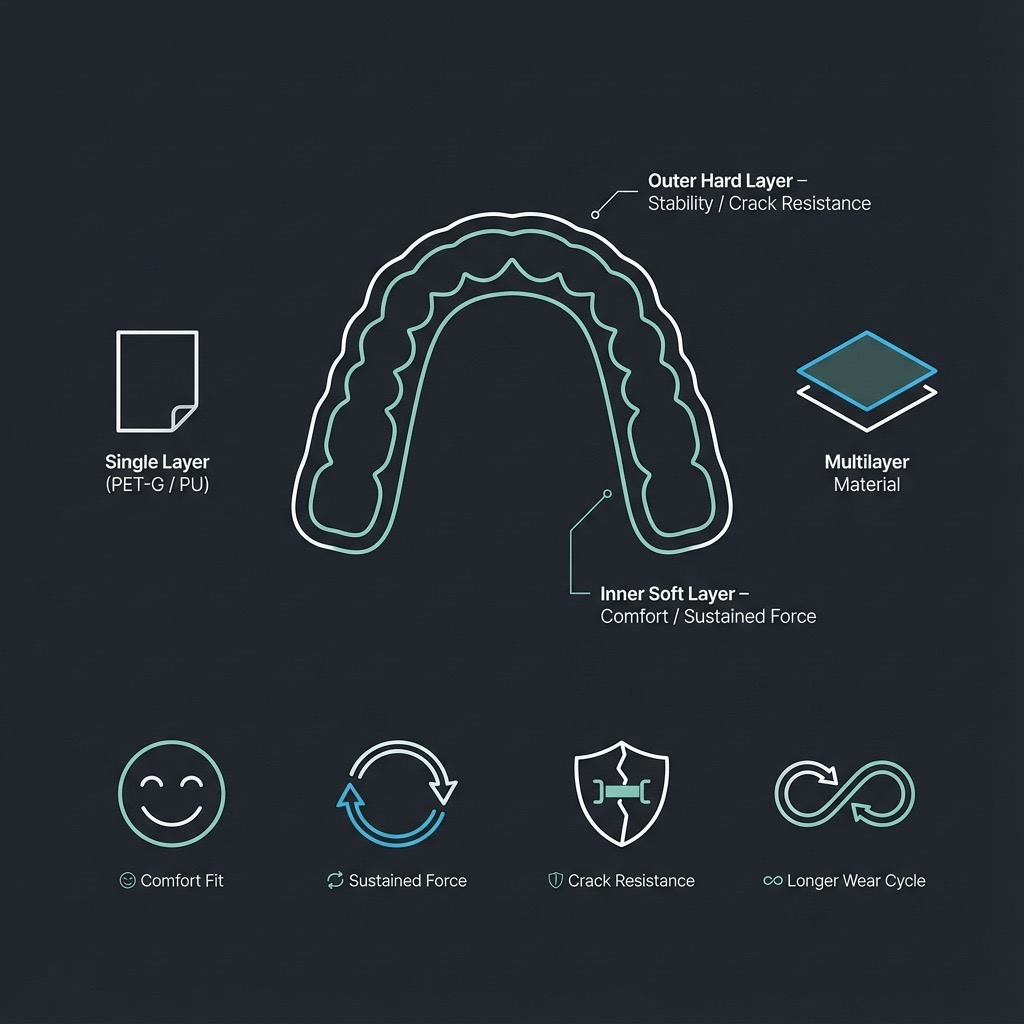
Enhanced Comfort: The flexible inner layer easily adapts to the dentition because of exhibiting a lower tensile modulus, and there are fewer chances of getting deformation due to continuous pulling force as well.
Sustained Force: The inner layer is the basic key to providing uniform, constant and optimal orthodontic force with strong and better initial strength to provide apt results within a desirable time frame.
Crack and Stain Resistance: Due to the advanced material design, the multilayered material is crack-free and does not get distorted easily.
Longer Wear Cycle: Multilayered materials have higher stamina owing to their better biomechanical properties, and they do not get fatigue easily due to a combination of separate layers that provide individual function solutions and deliver better results.
Why Multilayer Works Better
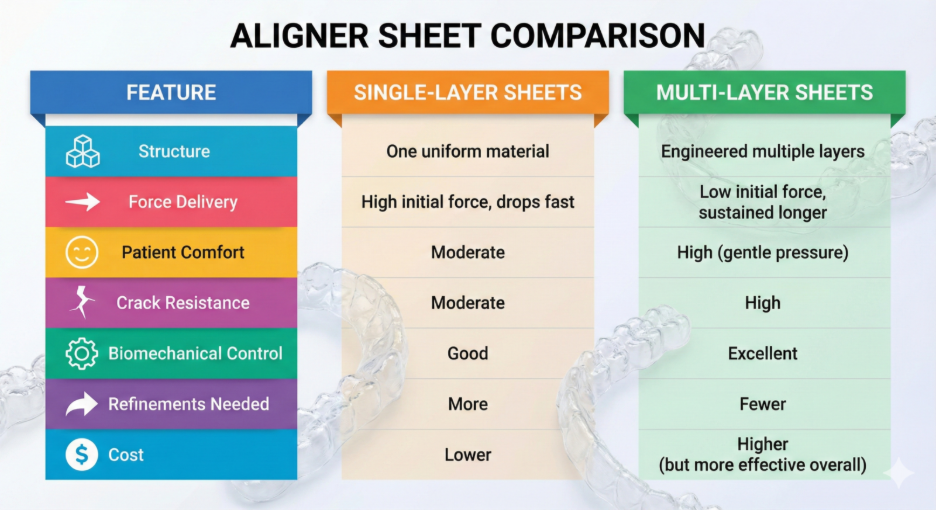
Single-layer sheets tend to “relax” or get fatigued quickly. Though they are good in terms of tooth movement, the catch is that the maximum tooth movement happens within the first 100 hours after putting in aligners, and then aligners should maintain their elasticity and their form to maintain the position for better bone resorption and integration. So, basically, aligners not only deal with bone but also with periodontal ligaments as well. Single-layered materials were not proving to be excellent in maintaining good periodontal retention, and thus, through multi-layered material with bonus 3D printing, we are gaining the desired precision.
Multilayer sheets use the elastic core to release forces gradually instead of all at once.
This means smoother, more consistent tooth movement.
Ideal cases with Multilayered aligner material
Since multilayered materials are a cumulative material with more stamina, long wear tenures and a crack-free nature. They are good to use in cases with complex movements, rotations, torque, crowding, cases needing sustained force, and teen patients with higher compliance needs.
Single-Layer Sheets: The Basics
Single-layer aligner sheets are made from one uniform material, usually PETG or PU.
They’re popular because they’re easy to thermoform and offer predictable performance. They had their own benefits and enjoyed a monopoly in the industry until multilayered material came into the picture.
Advantages
- Simple and cost-effective manufacturing
- Consistent thickness across the sheet
- Easy to trim and finish
- Good optical clarity (especially PETG)
- Stable shape for mild to moderate movements
Use Case: Mild to moderate movements, cases that prioritise appearance and shape stability.
Taglus Ultra
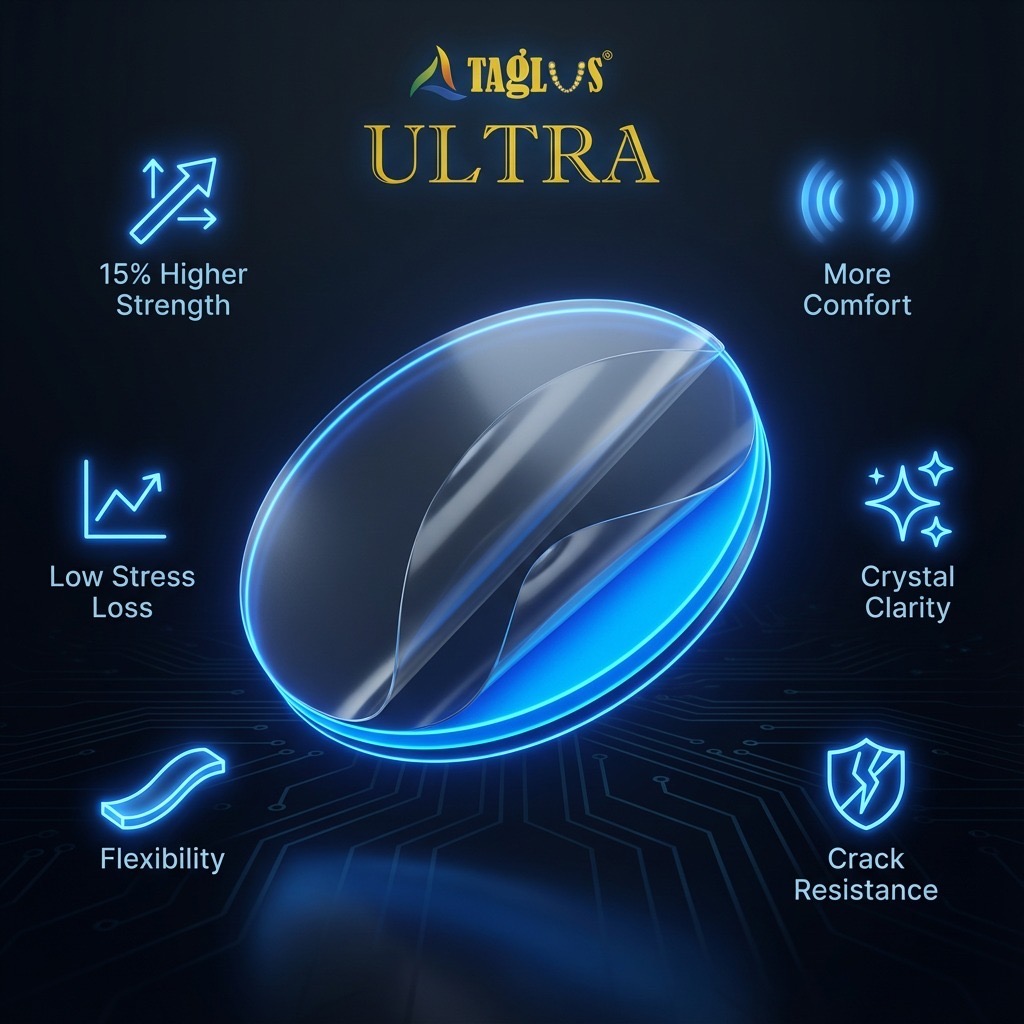
As multilayered materials continue to redefine reliability and sustained force delivery in orthodontics, Taglus is elevates this category even further with Taglus Ultra, our next-generation multilayer aligner sheet engineered for higher precision, better force longevity, and enhanced patient comfort
Based on extensive internal testing and benchmark comparisons, here are its core advantages:
Better Force for Tooth Movement
• 15% higher initial strength for better attachment grip & early movement control.
More Comfortable
• Up to 10% more comfort due to lower tensile modulus.
Better Stamina
• Low stress loss – delivers consistent force longer (marathon, not sprint).
Crystal-Clear Appearance
• Protective film ensures high clarity & clean thermoforming.
Higher Patient Compliance
• Lower initial force = softer, more wearable feel.
Flexible & Elastic
• Higher elongation for better adaptability without losing control.
Crack-Free Strength
• High strength + high elongation at break keeps aligners crack-free.
Conclusion
Multilayer aligner materials have reshaped the direction of modern orthodontics by offering longer force duration, better comfort, and superior biomechanical control compared to traditional single-layer sheets. As treatment protocols continue to push for higher precision and fewer refinements, the importance of using scientifically engineered materials becomes even more critical.
With the introduction of Taglus Ultra, clinicians now gain access to a multilayer sheet that doesn’t just match industry expectations but rather exceeds them. Enhancing stamina, higher clarity, improved flexibility, and outstanding crack resistance make it a reliable choice for complex movements, long wear cycles, and patients who demand comfort without compromising results.
Multilayered aligner materials like Taglus Ultra stand as the next step in aligner material innovation, empowering dentists and labs to deliver predictable outcomes with confidence.
Know More About Us
SignUp To Our Newsletter And Get To Know More About Taglus

Taglus is the global industry leader in the manufacturing of innovative clear Aligner and retainer thermoplastic sheets.

Copyrights@taglus-2026
*Taglus is a trademark of Vedia Solutions

Leave a Reply