


Enquire Form
Low Odour Dental Resins: The Strong and Safer Option
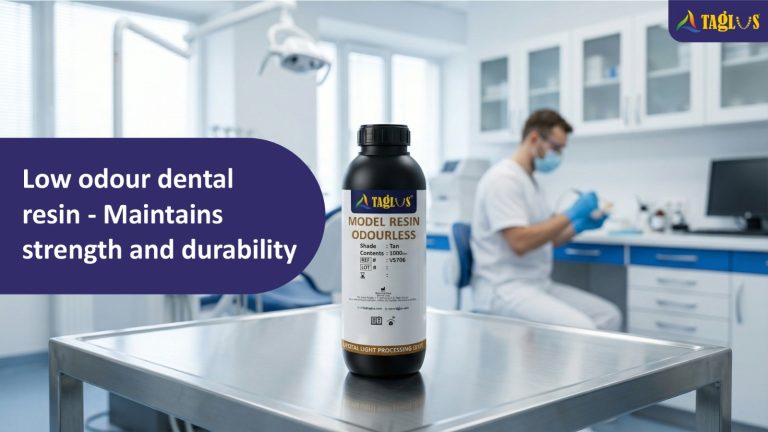
If you work in a dental lab or around dental materials regularly, you have probably noticed the sharp smell that hits you the moment you open a container of dental resin. It’s hard to ignore, and honestly, it probably should not be. Low odour dental resins have been getting a lot of attention lately, and for good reason. Whether you are a dental technician, a clinician, or someone just trying to understand your dental materials better, it is worth taking a moment to look at why these odours happen, what they mean for your health, and what a lower-odour alternative might look like in practice.
Why Dental Resins Produce Odour?
The smell that comes from many commonly used dental resins is primarily down to the monomers they contain — chemical compounds like methyl methacrylate (MMA) and other acrylates. These monomers along with other volatile organic compounds evaporate easily at room temperature and release chemical vapours into the surrounding air.
Dental resins are used in enclosed or semi-enclosed spaces such as labs and clinics. They are often handled for long hours, and the professionals working with them may be exposed to them almost every day.
What Problems Can the Odour Cause?
The smell itself is unpleasant, sure, but the concern goes well beyond simple discomfort. The vapours produced by traditional dental resins can cause a range of short-term and long-term health effects, particularly for those who are exposed repeatedly over time.
In the short term, people often report eye and nose irritation, and a general feeling of dizziness or nausea when working with these materials in poorly ventilated areas. These are not trivial complaints, they can make a working shift genuinely uncomfortable and affect concentration and performance.
Over the longer term, however, the picture can get more serious. Repeated exposure to certain monomers, particularly MMA, has been linked to respiratory sensitisation, skin sensitisation, and in some cases occupational asthma. There is also growing evidence that long-term exposure to certain volatile organic compounds (VOCs) present in dental resins may be linked to wider health risks. That said, research is still ongoing, and the full picture is not yet completely clear.
Beyond individual health, there is also the matter of the working environment more broadly. Patients sitting in a dental chair, especially children or those with sensitivities, may find strong resin odours distressing. And for labs or clinics that take occupational health seriously, managing chemical exposure is not just a moral concern; it is often a regulatory one too.
The Low Odour Dental Resin Option
So, what exactly makes a low odour dental resin different from a standard one? The answer generally comes down to formulation. Low odour resins are typically engineered using monomers and additives that are less volatile. In other words, they do not evaporate as readily at room temperature, which means fewer chemical vapours are released into the air during use.
A lower odour does not mean a compromise in performance, and in some cases, newer formulations have managed to improve both fronts simultaneously.
The Benefits of Taglus Low Odour Dental Resin
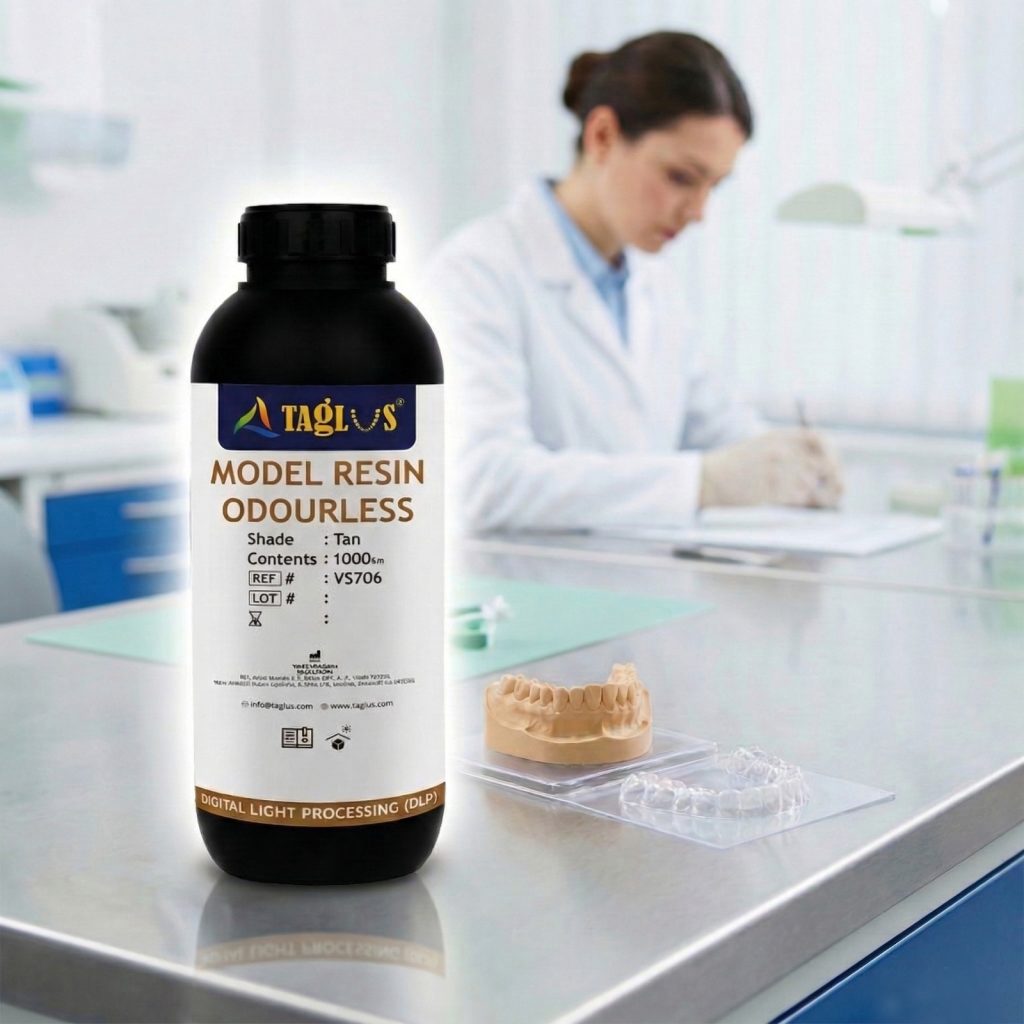
The Taglus low odour dental resin is designed specifically with the working environment in mind. The reduced odour formulation is intended to make the day-to-day experience of handling resin noticeably more comfortable, particularly in labs where technicians may be working with the material for several hours at a stretch. That kind of sustained exposure is exactly where a lower-odour product can make a real difference to someone’s working life.
In terms of performance, Taglus has engineered the low odour resin to maintain the strength and durability that dental technicians need. Flexural strength and impact resistance are reportedly in line with what you would expect from a quality dental resin.
There is also the question of compatibility. Taglus resins are formulated to work within standard laboratory workflows, which is important for professionals who do not want to completely overhaul their process just to switch materials.
Reducing chemical exposure for your team is good practice regardless of whether current exposure levels are considered dangerous, it demonstrates a commitment to occupational health, may reduce the risk of sensitisation issues down the line, and can improve staff wellbeing and retention in roles that are already physically demanding.
Conclusion
The smell from traditional dental resins is not just unpleasant. That smell usually indicates chemical volatility, and over time, that can have real consequences for health and overall wellbeing.
The positive side is that low-odour alternatives have come a long way. They are no longer a trade-off, but a dependable and practical option for everyday use.
Products like Taglus low odour dental resin reflect where the industry is gradually moving. Built around the increasing awareness around occupational health in dental clinics and labs, this shift feels both necessary and timely. To know more about Taglus Low Odour resins, contact us today.
Have Questions?
 Talk to us on WhatsApp
Know More About Us
SignUp To Our Newsletter And Get To Know More About Taglus

Taglus is the global industry leader in the manufacturing of innovative clear Aligner and retainer thermoplastic sheets.

Copyrights@taglus-2026
*Taglus is a trademark of Vedia Solutions
Leave a Reply