


Enquire Form
Why More Labs Are Switching to Indian-Manufactured Aligner Materials
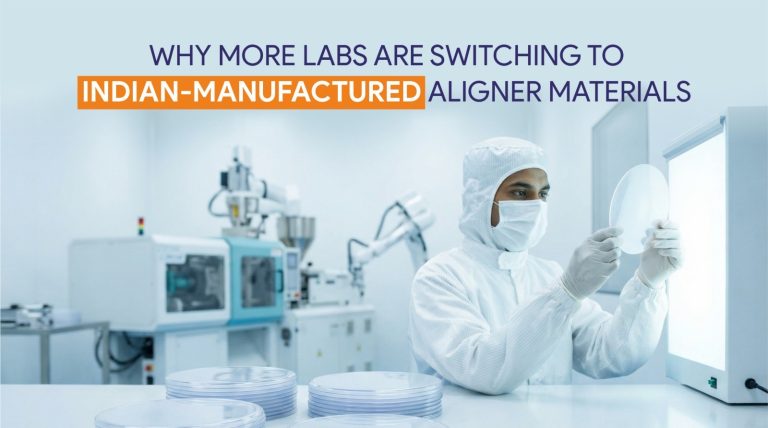
The global aligner market has changed fast. Five years ago, most labs were dependent on imported sheets from a handful of suppliers. Today, a growing number of labs across India, the Middle East, Southeast Asia, Europe, and even North America are shifting to Indian-manufactured aligner materials.
This shift is not about prices alone. It is about performance, reliability, speed, and control.
Indian aligner material manufacturing has matured exponentially over years. Labs no longer see it as an alternative. They see it as a serious upgrade.
Here is why.
1. The Quality Gap Has Closed
Earlier, imported materials had a visible difference in offering clear edge technology, better optical clarity, desired force delivery, and required consistency. That gap no longer exists.
Indian manufacturers now use:
- Medical-grade polymers
- Precision extrusion systems
- Multi-layer sheet technology
- Strict batch testing protocols
The result is material that delivers:
- Stable force over wear time
- High transparency
- Controlled elasticity
- Low stress whitening
- Predictable thermoforming behavior
Many labs that test Indian sheets side by side with imported brands report the same clinical output and better production stability with better pricing and assurance. The quality with Indian aligners sheet is no longer a question, it is a standard.
2. Faster Supply Chains Mean Faster Turnaround
Every lab understands one thing that delays kill growth, consistency in the workflow, and traction. The labs placed
For India based labs, imported materials come with
- Long shipping cycles
- Customs clearance delays
- Currency volatility
- Stock uncertainty
Indian-manufactured sheets solve this problem and the lab gets
- Local availability
- Shorter lead times
- Predictable restocking
- Better production planning
For international labs sourcing from India, bulk exports now move faster than many traditional European routes. Indian logistics infrastructure has scaled rapidly in the last five years. Speed, which was earlier a negative aspect for Indian labs have now become a competitive advantage.
3. Better Control Over Costs Without Compromising Output
Overviewing the financial aspect, the profit in aligner and margins keep getting tighter. Clinics want faster delivery, and patients want lower prices. Labs face pressure from both the sides. Keeping a profitable balance is the need for the hour.
Imported materials often cost 30 to 60 percent more due to:
- Freight
- Import duties
- Distributor margins
- Currency swings
Indian sheets eliminate most of that overhead, but the bigger advantage is cost predictability.
Labs can:
- Lock long-term pricing
- Avoid currency risk
- Plan production costs better
- Scale without margin pressure
- Lower material cost does not mean lower quality. It means better business control.
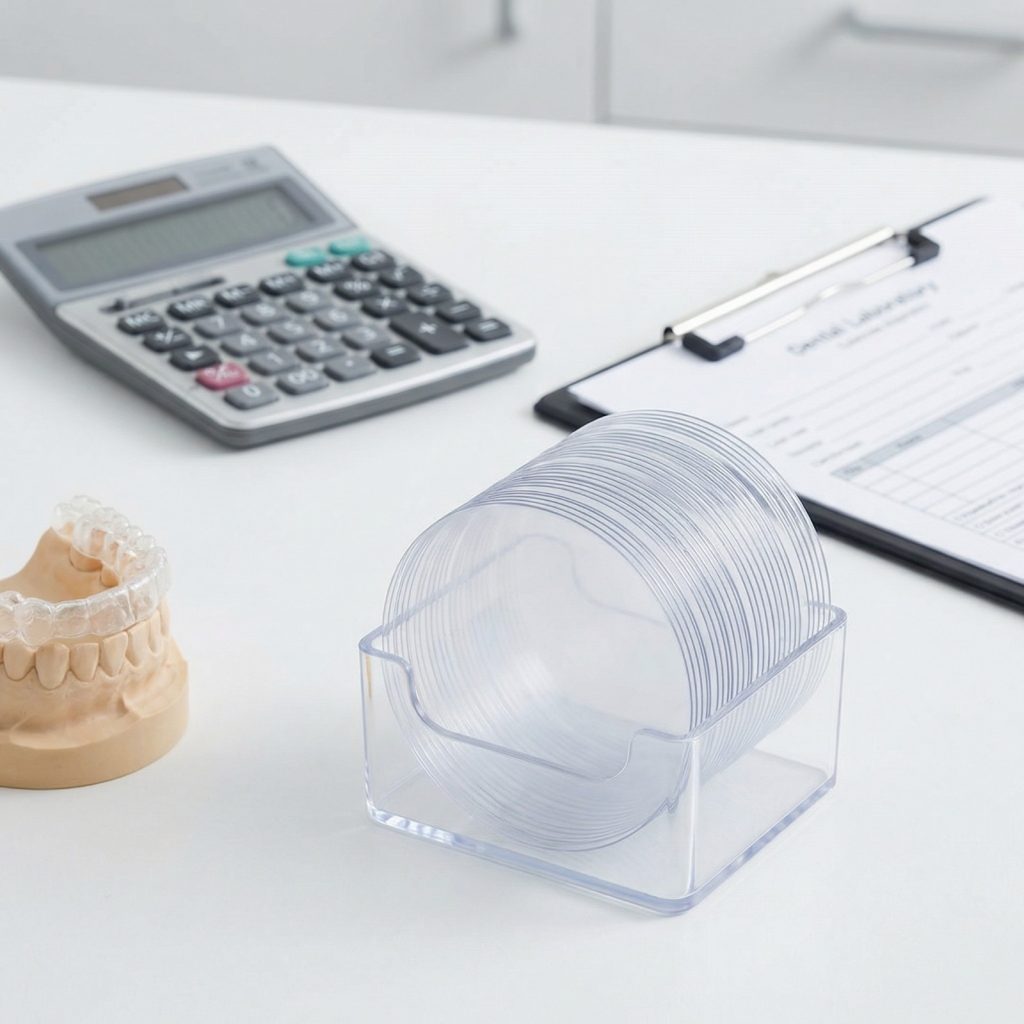
4. Manufacturing Built for Scale
Indian manufacturers do not build for boutique volumes. They build for mass production. Most facilities operate with:
- High-capacity extrusion lines
- Automated sheet calibration
- Inline thickness control
- Cleanroom packaging
- Batch traceability systems
These things matter a lot when labs grow. Scaling with small suppliers creates supply bottlenecks, whereas collaborating with industrial manufacturers keeps production smooth. For aligner brands expanding into new markets, this production depth becomes significant.
5. Customization Is Easier
Imported suppliers often operate on rigid product catalogs. Thickness options are limited. Layer structures stay fixed.
Indian manufacturers offer:
- Varied thickness ranges
- Multi-layer tuning
- Force curve optimization
- Finish and clarity customization
This gives labs the freedom to build differentiated aligner systems instead of selling commodities and uniform products. Varied material availability builds brand value. It also improves treatment predictability.
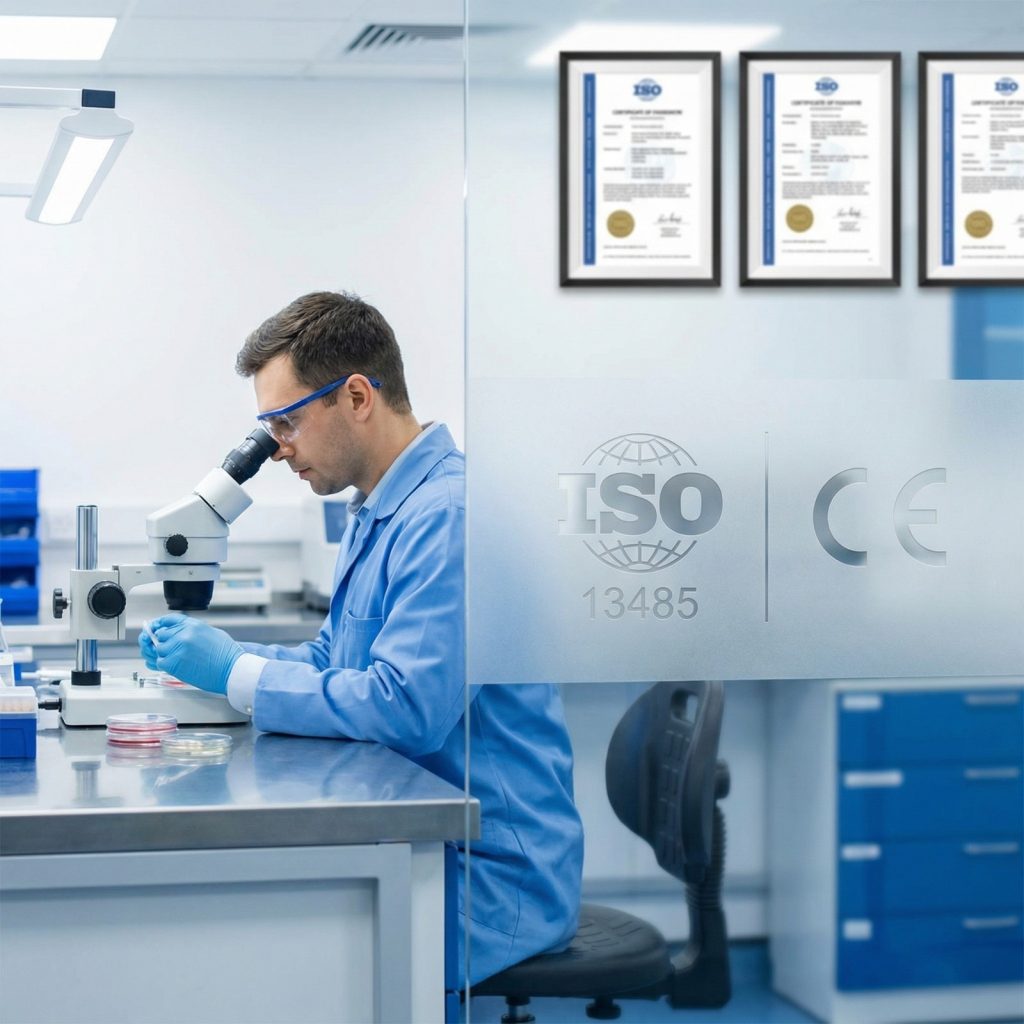
6. Global Compliance Is No Longer a Barrier
Modern Indian aligner materials now comply with:
- ISO standards
- CE certifications
- Biocompatibility testing
- Medical polymer regulations
International labs no longer face regulatory hurdles when sourcing from India. The manufacturing ecosystem has matured, and compliance is part of the system, not an afterthought.
Manufacturing power has diversified. India has become one of the strongest production hubs for dental materials in the world.
Labs that adapt early gain:
- Better margins
- Faster growth
- Stronger supply security
- Higher product control
This is not a trend or a sudden transformation. The idea that India is having quality sheets manufacturers that give better options and services to the customers has turned into a clearer reality with gradual structural shift.
At the end of the day, your aligner material decides your product quality, production speed, and business scalability. Choosing the right manufacturing partner now shapes your growth for the next decade.
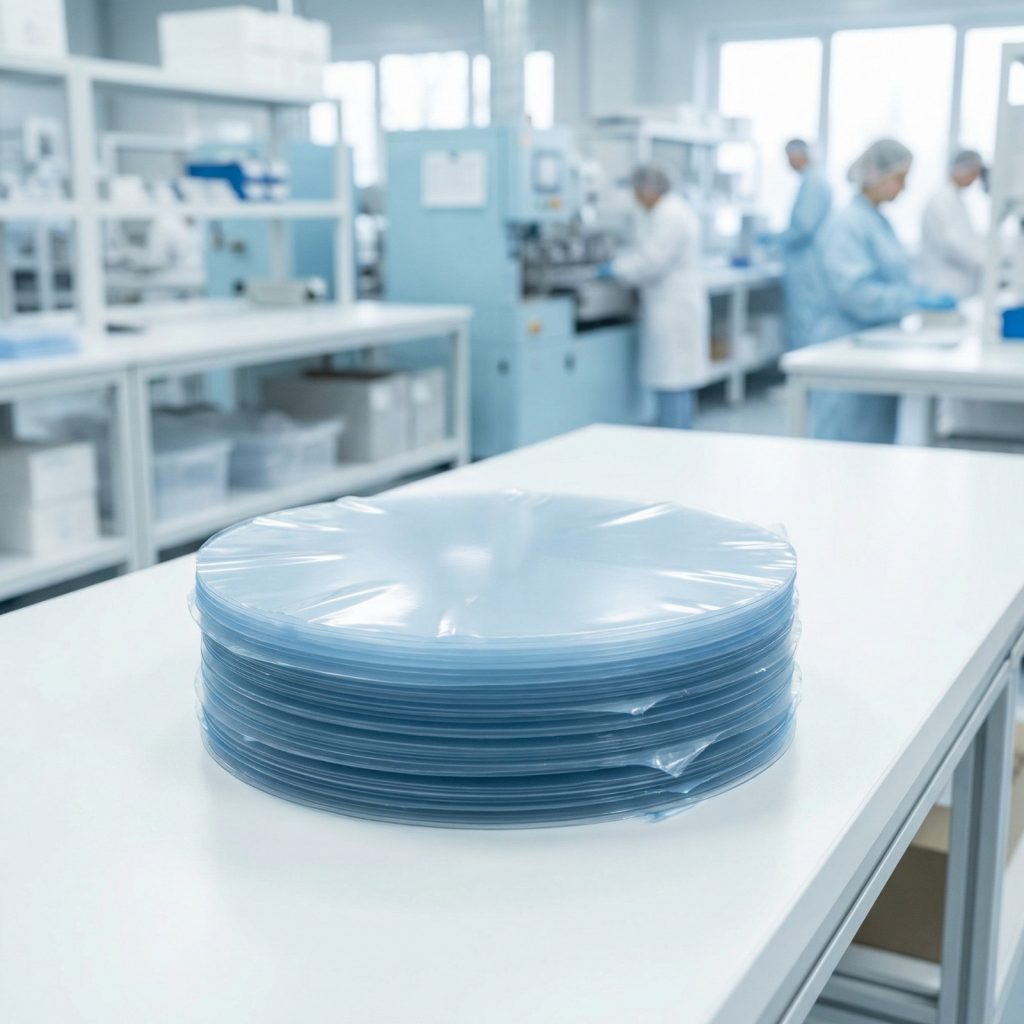
Taglus works closely with labs and aligner brands across India and international markets to supply high-performance aligner materials engineered for real-world production. The focus stays simple- Reliable output, consistent quality and scalable manufacturing.
Have Questions?
 Talk to us on WhatsApp


Know More About Us
SignUp To Our Newsletter And Get To Know More About Taglus

Taglus is the global industry leader in the manufacturing of innovative clear Aligner and retainer thermoplastic sheets.

Copyrights@taglus-2026
*Taglus is a trademark of Vedia Solutions
Leave a Reply